Math

Homeschool Math Curriculum, Kindergarten Through Calculus

Math is where homeschool plans go to die, because it is sequential. Miss one rung and everything above it wobbles, and a workbook cannot tell you which rung it was. Primer breaks every math skill into a ladder, finds the rung your student is actually on, and teaches it inside the things they love.

Counting to calculus Common Core aligned, optional A grade level on every rung Mastery tracked per skill
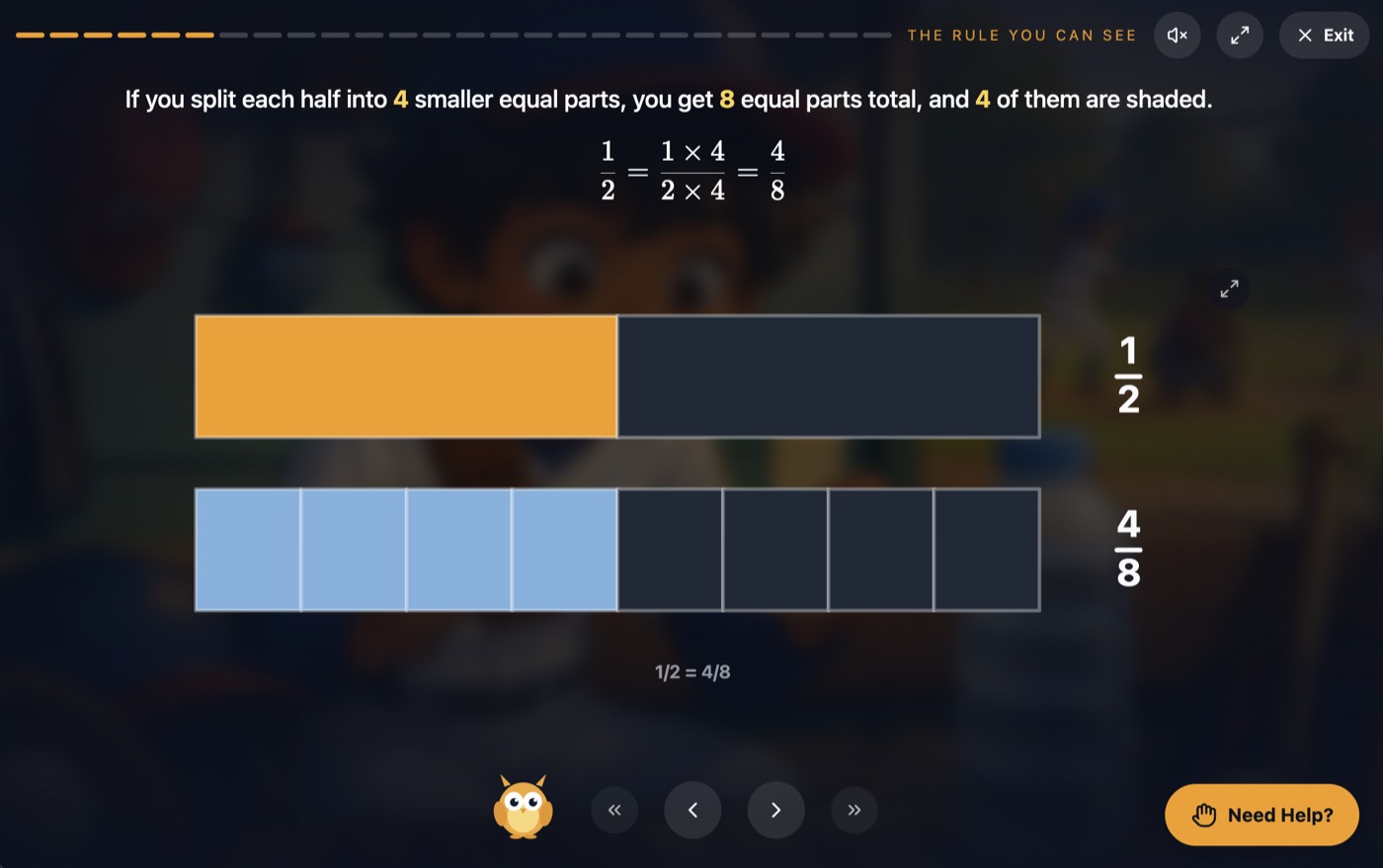
A Primer lesson showing fraction bars for one half and four eighths
What actually helps

What the research says works in math is exactly what is hardest to do by hand with one workbook and one parent.

Each of these rests on learning science that has been replicated for decades. The studies, in plain language, are on the research page.

1

A tutor who asks the right next question

Intelligent tutoring systems that adapt to each student's pace and gaps raised scores by about two thirds of a standard deviation, moving a typical student from the 50th to the 75th percentile, and beat controls in 46 of 50 studies. One student at a time, never thirty.

2

Master each step before building on it

Mastery learning averages half a standard deviation of gain, with the strongest effects for the weakest students. In math that is the whole game: a student who moves to fractions without place value is not behind, they are building on sand.

3

Recall it later, do not just reread it

Spacing practice out beats cramming across 317 experiments, and recalling beats restudying. Math facts, in particular, have to be brought back days and weeks later to stick.

How Primer handles it

Here is how math is organized in Primer, and what a math lesson looks like for one student.

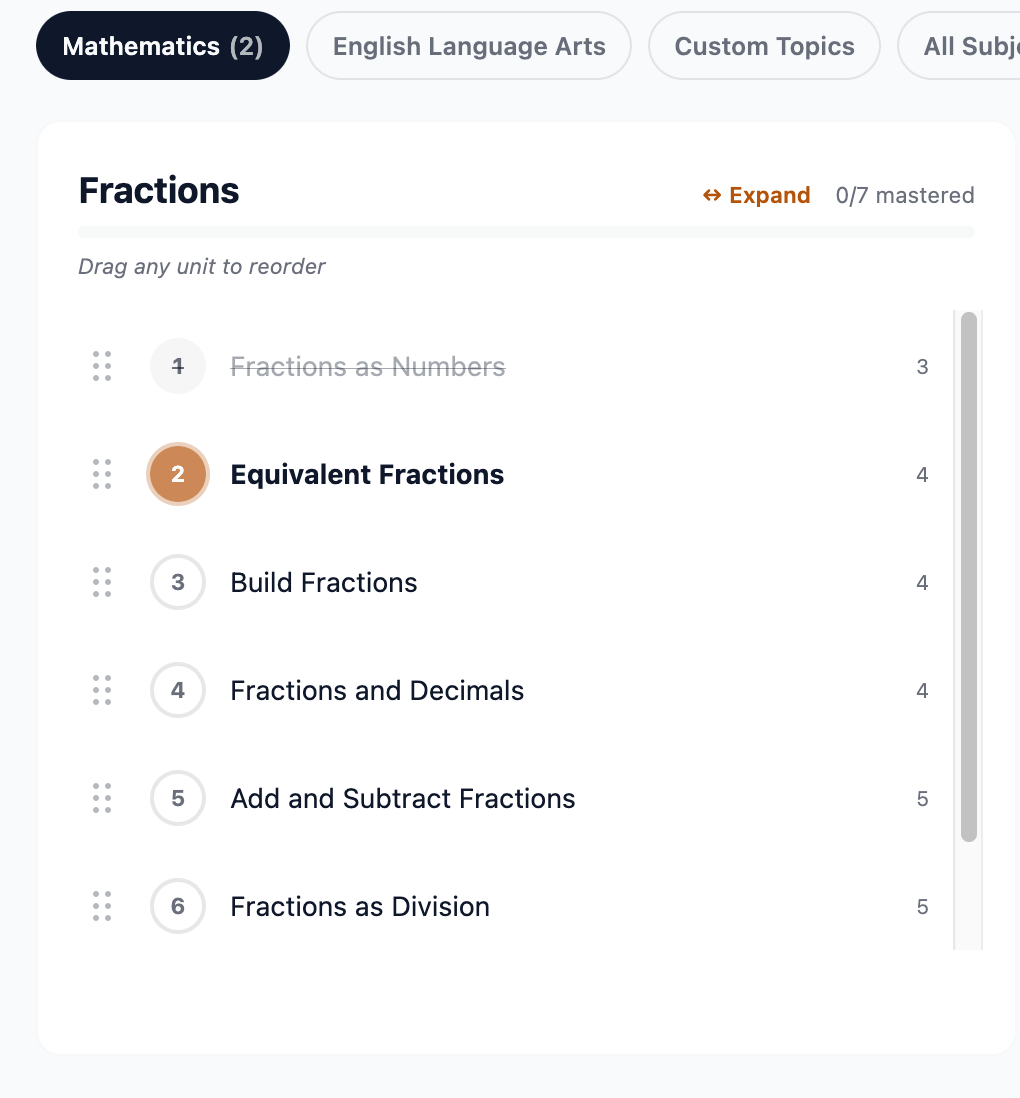
A Fractions path six lessons deep, lesson one struck through as mastered, with grade numbers down the right

Every skill is a ladder with the grade on each rung

Addition and Subtraction, Counting and Cardinality, Math Facts, Place Value, Geometry, Measurement and Data, Fractions, Ratios and Proportions, Pre-Algebra, Word Problems, up through Calculus. Switch a skill on and Primer sequences it into lessons, each resting on the one before, with the typical grade level printed on the right of every row. Read down Fractions and it goes 3, 4, 4, 4, 5, 5.

Skills, paths, and curriculum →

The panel asking where a student should start in a subject

Start on the rung they are actually on

The Starting Point Check finds where a student should begin a subject: eighteen adaptive questions, no timer, no score shown to the student. Units below the result are marked Tested Out. A student lost in fifth grade fractions is often missing a third grade rung, and the ladder shows you which one.

The Starting Point Check →
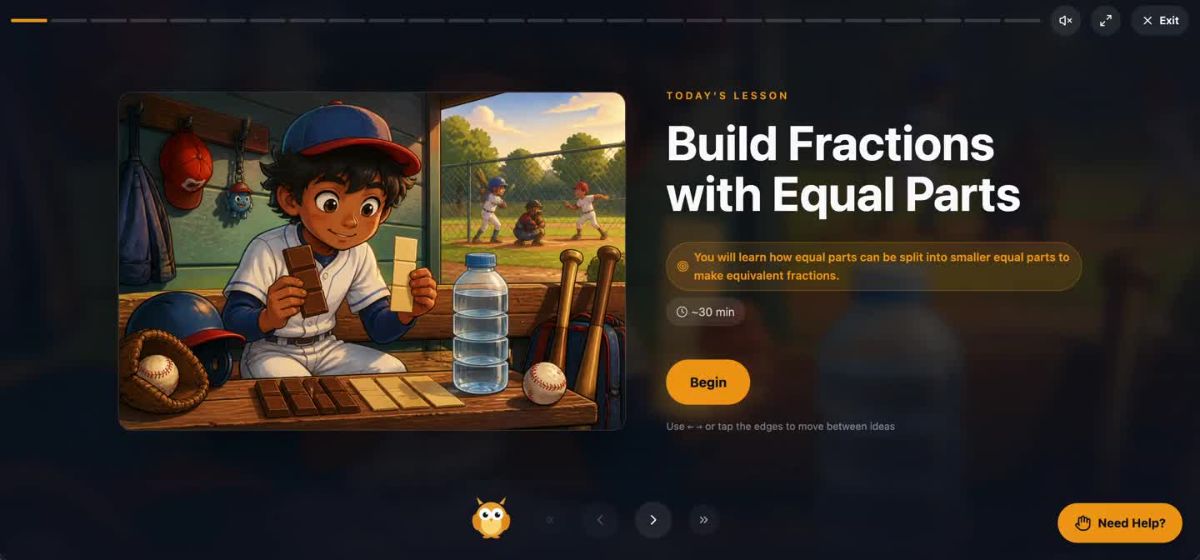
The title page of a fractions lesson set in a baseball dugout

Fractions, taught in the dugout

Theo loves baseball, so his equivalent fractions lesson opens in a dugout with a chocolate bar broken into pieces. A few slides later the fraction bars carry the idea on their own. Same objective, same exit ticket, a different world for every student. Charts, illustrations, and a hand-picked video where one fits.

The same lesson, twice →
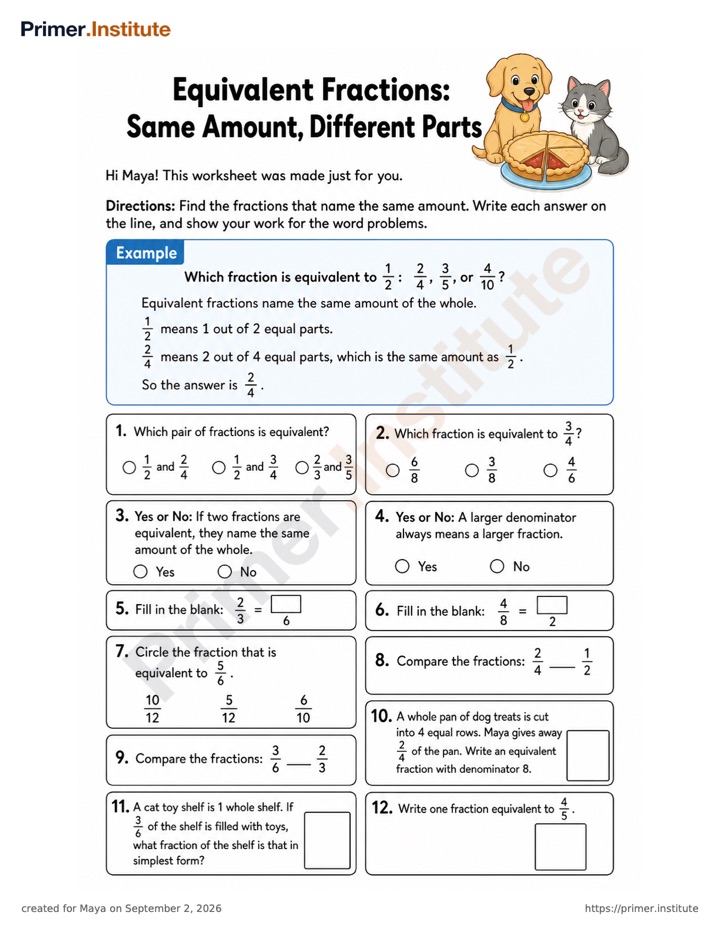
An equivalent fractions worksheet made for Maya, with a dog and cat illustration

A worksheet with their name on it, answer key included

Every lesson ends with a printable worksheet built from that lesson, addressed to the student, with their interests in the word problems and the answer key on the last page. Fill it out on paper or on an iPad with Apple Pencil.

See real worksheets →
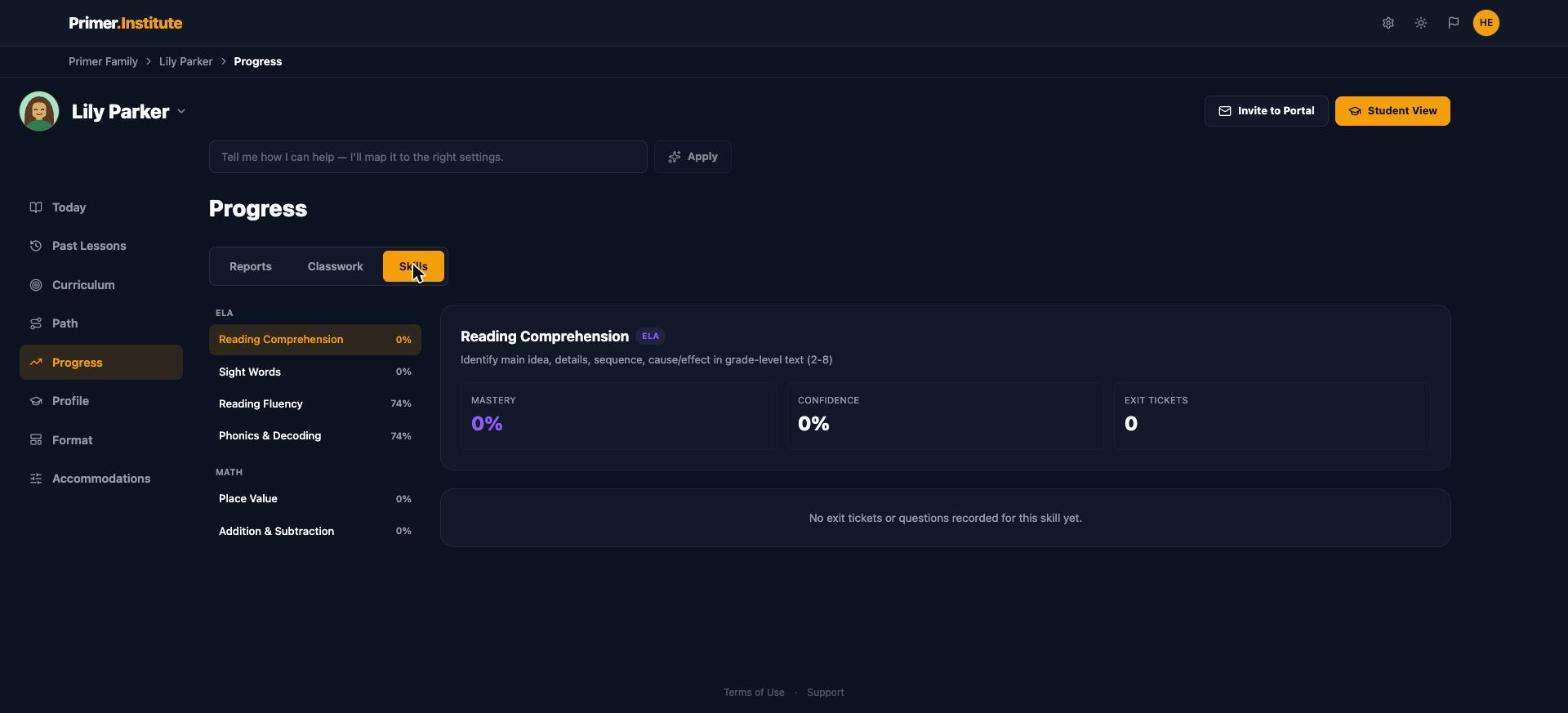
The Skills tab with Mastery, Confidence, and Exit Ticket counts for one math skill

Mastery per skill, and the mistakes they keep making

Each exit ticket moves the skill's mastery number, weighted toward recent work, so a rough September does not hide a strong November. The Recurring Misconceptions report shows when a student misses questions the same way, with the correction in the words they saw. A Quick Update box takes a note like "focus more on fractions" and applies it.

How Primer measures progress →
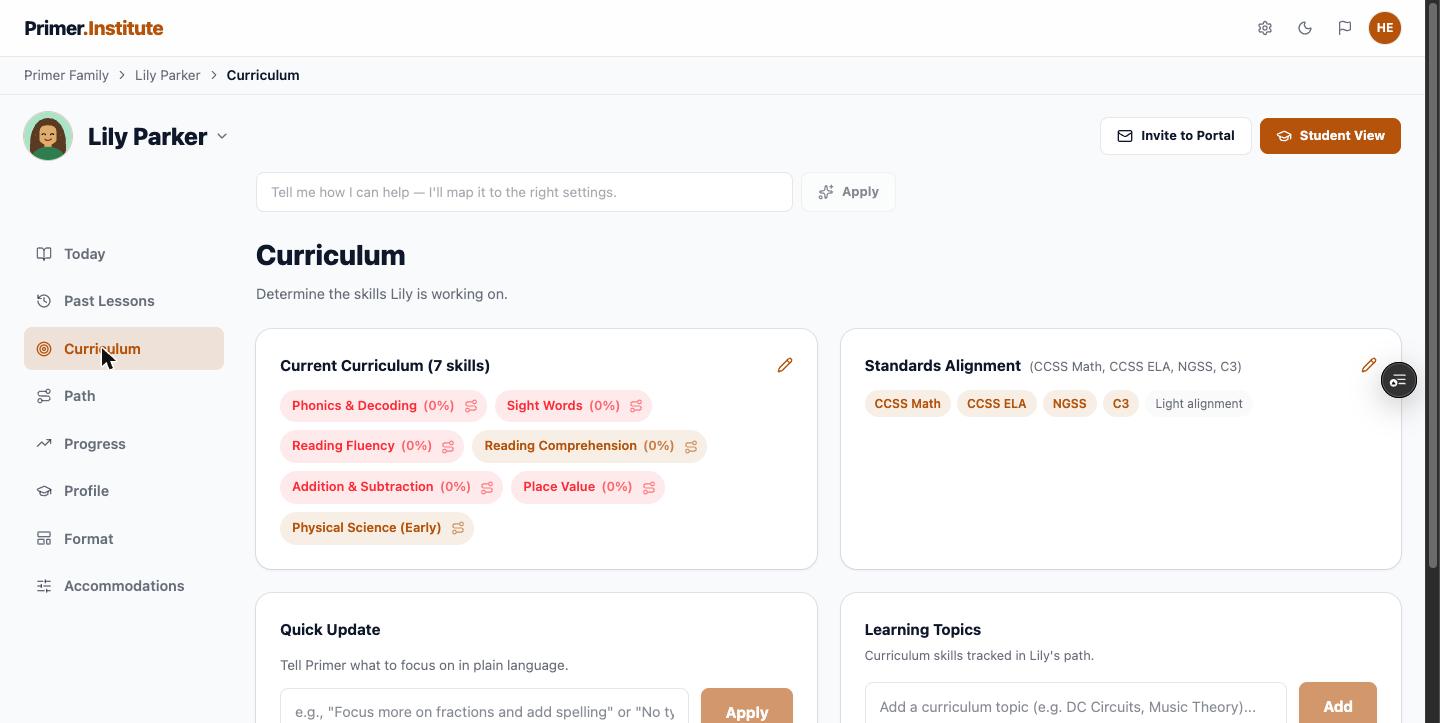
The Curriculum tab showing active skills and the Standards Alignment panel

Standards alignment, if you want it

At intake you decide whether lessons are checked against Common Core, NGSS, C3, or your state framework, and how strictly. The Curriculum tab shows a Standards Alignment panel for each student. Or leave it off and let the ladder be the standard.

The intake interview →
Getting started

Set it up once. It adapts from there.

  1. Try one free lesson first. A first name, an age, one thing they love, and one topic. No account. The lesson opens on your screen in a minute or two.
  2. Tell Primer about them. Five to ten minutes at intake on what they love, where they get stuck, what has helped before, and what you want them to master.
  3. Let them find their starting spot. Offer the Starting Point Check on each subject, or pick the starting unit yourself, then generate the first batch.
  4. Read the week. A written summary lands every week, with the numbers behind it a click away, and a teacher you can email.
$40 per student, per month
  • Full K through 12 curriculum
  • About 100 lessons a month
  • Read-aloud and dyslexia-friendly mode
  • Weekly parent progress summary
  • 14-day free trial, cancel anytime
Start Free Trial
Questions parents ask

Before you decide

What grades and topics does Primer math cover?

Kindergarten counting and cardinality through high school calculus, in one place. Elementary, middle, and high school skills are all available to any student; the grade band is a filter on what you browse, not a limit on your student.

Is it aligned to Common Core?

It can be. Intake asks whether lessons should be checked against Common Core, NGSS, C3, or your state framework, and how strictly. Every rung on a path also shows its typical grade level, so you can see where your student stands against a conventional sequence.

How do I know what my child has actually mastered?

The Progress tab breaks it down per skill: a mastery percentage weighted toward recent exit tickets, a confidence number that says how much evidence is behind it, and every question they were asked. Primer does not call a skill mastered until three consistent exit tickets say so.

Can I use Primer just for math alongside another curriculum?

Yes. Switch on one math skill, or a whole subject, and nothing else. Many families use it exactly that way, as a tutor for the one thing that is not fine.

See what a lesson written for your kid looks like.

One free lesson, no account: their name, one thing they love, and one topic. Or start a free trial and let them find their starting spot.