

The Primer blog

Notes from inside the curriculum.

How the product actually works, shown with real student paths and real screens. Written for the parent who has to make next week happen.

Follow by RSS
A teenage boy in a navy hoodie working on a laptop at a kitchen table, with rain on the window behind him.

How Primer works ·

Primer Forgets Nothing

Every lesson, question, and raised hand is kept, per student, and used to decide what comes next. What the memory holds, how it sets the pace, why it is more than a lesson on demand, and what it looks like after a month, six months, and a year.

Read the post →

A girl in a blue hoodie working on a tablet at a sunlit kitchen table, with a notebook and a bowl of apples beside her.

New in Primer ·

Where Should They Start? Now You Don't Have to Guess

A short activity your student does once per subject finds the right starting unit and shows its work. What it accomplishes, what it feels like for the student, and why it places well instead of just quickly.

Read the post →
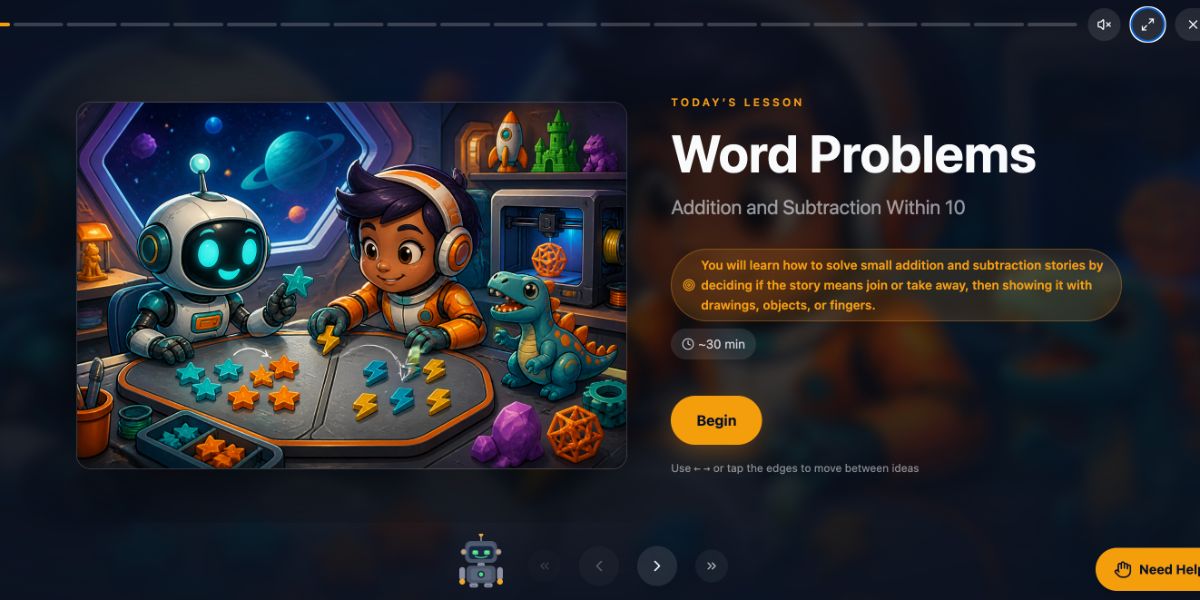
The title page of a Word Problems lesson in Cinematic view, with an illustration of a young astronaut and a robot sorting tokens on a spaceship table.

New in Primer ·

Cinematic Lessons: Every Idea, Shown as Well as Told

Every lesson now opens in an immersive full-screen view, one idea at a time, with a visual drawn for that idea. What the new view looks like, how to use it, and why it helps ideas stick.

Read the post →
A teacher holding folders in front of a chalkboard listing school subjects.

Curriculum ·

You Are the Principal Now

You pick skills, Primer builds a path through each one, and everything running at once is your student's curriculum. What each layer is, and exactly which decisions stay yours.

Read the post →
A young girl writing on a Primer handwriting worksheet on an iPad with an Apple Pencil.

New in Primer ·

Handwriting Practice, Built for One Student

Letter formation is muscle memory, and muscle memory only comes from doing it correctly, a lot. Animated stroke order, a five-column gradual release, read-aloud directions, and a report read off the page itself.

Read the post →
A girl wearing a stethoscope beside a horse in a sunlit pasture.

Custom topics ·

You Decide What They Study

Theo, who is eight, wanted to know how circuits work. Maya wants to be a horse veterinarian. Neither is a fourth-grade unit anywhere. Here is exactly what it took to turn each of those sentences into a real course, screen by screen.

Read the post →

Get these in your inbox.

Most of what ends up here starts as our weekly newsletter: lesson ideas, family stories, and what we are building next.