
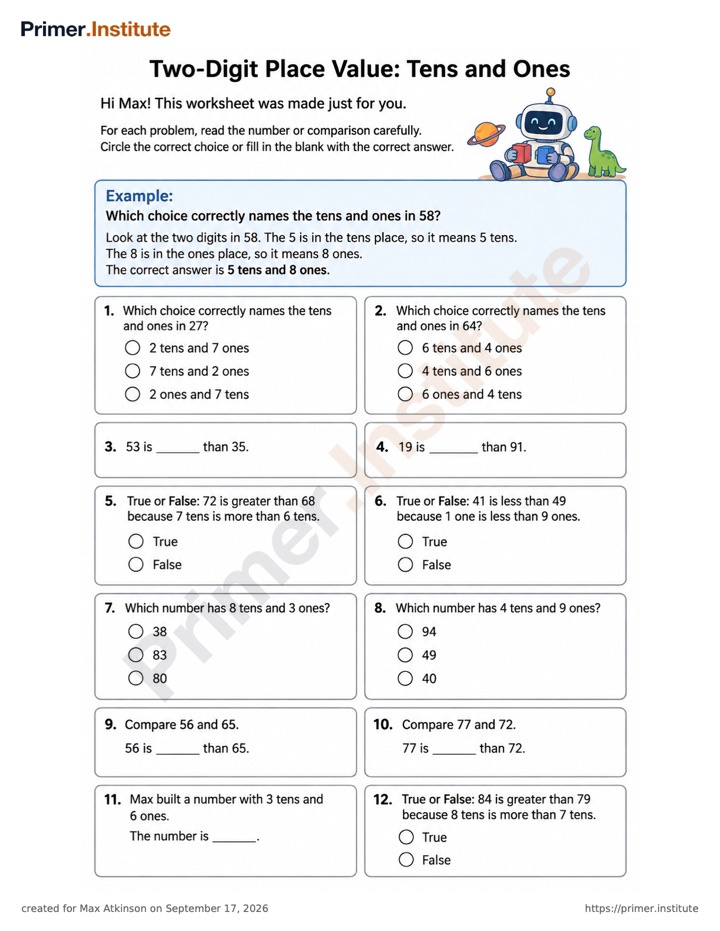
Two-Digit Place Value: Tens and Ones
Made for Max, who is into robots and dinosaurs
Twelve problems on what the two digits in a number mean. Max names the tens and ones in 27 and 64, builds a number from 3 tens and 6 ones, and decides whether 72 is greater than 68 and why. The reasoning questions are the point: a tens digit outranks any number of ones.
Skills on this worksheet
- Name the tens and ones in a two-digit number
- Build a number from a given count of tens and ones
- Compare two-digit numbers using greater than and less than
- Explain a comparison by looking at the tens place first, then the ones
Question types: Multiple choice, fill in the blank, and true or false with a reason.
Three of the questions
- Which choice correctly names the tens and ones in 64?
- True or False: 72 is greater than 68 because 7 tens is more than 6 tens.
- Max built a number with 3 tens and 6 ones. The number is ____.
The answer key gives the answer to every question and, for the worked example at the top, the reasoning behind it.
How it was personalized
Max is into robots and dinosaurs, so both show up in the illustration at the top and in the problem where Max builds a number himself. The place value work is the standard first grade sequence: name the digits, then compare.
A real lesson, a real student
Every Primer lesson has an Unplugged step, and any lesson can turn into a printable worksheet with one tap. This one came out of Max's lesson on the same topic, so the questions check exactly what the lesson taught, in the words the lesson used. Names, interests, and the illustration come from Max's profile.
Fill it out on paper, or on an iPad with Apple Pencil, where it is graded letter by letter. How worksheets work in Primer.

Get one with your student's name on it.
Every Primer lesson ends with a worksheet like this one, written for your student and their interests. Try a single free lesson with no account, or start a free trial.