Gifted and advanced

Homeschool Curriculum for a Gifted or Advanced Child

He finished the fourth grade math book in October. She reads three years ahead and is bored out of her mind by the "grade-level" reading list. The problem with an advanced kid is rarely ability. It is that every curriculum is built around a grade, and the grade is wrong.

Advance by mastery K through calculus Any grade band, any age A course from one sentence
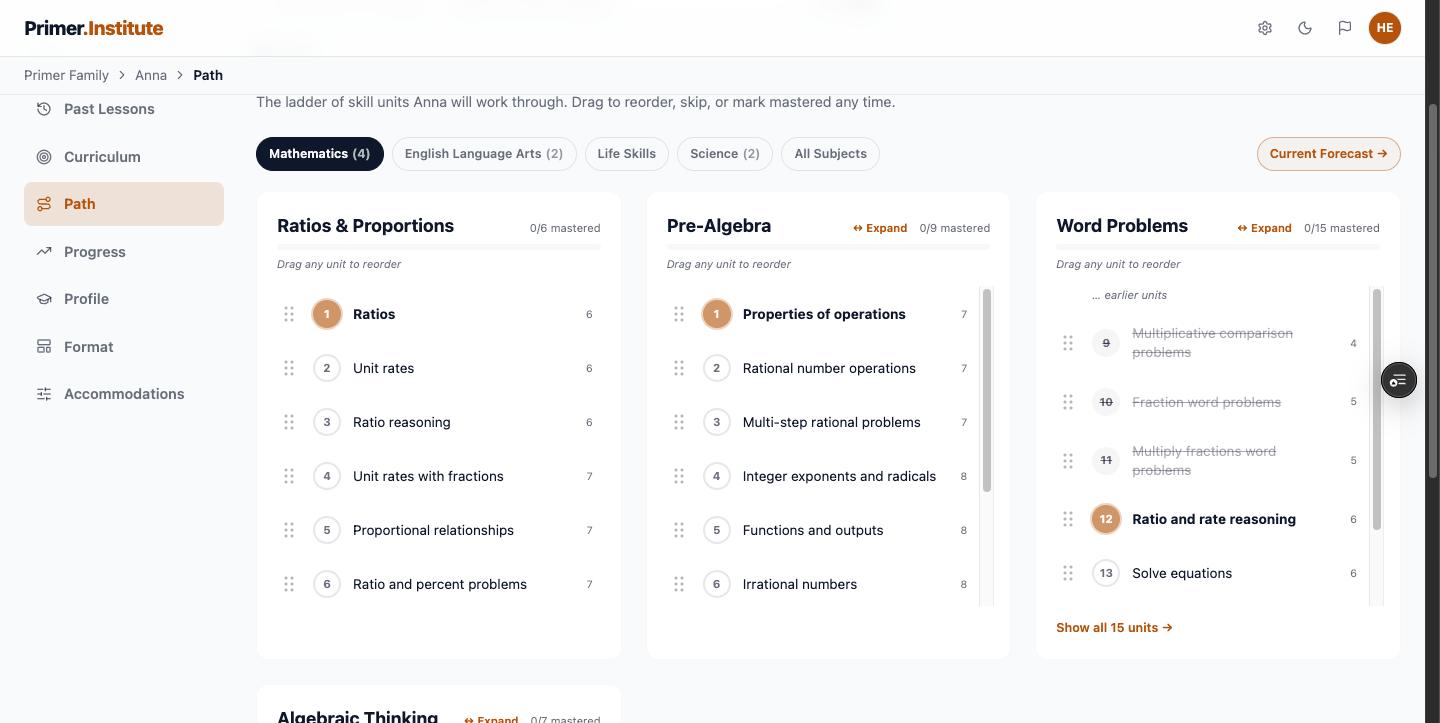
Three math skill ladders side by side on the Path tab, each rung marked with its typical grade level
What actually helps

A gifted student does not need a harder version of the same year. They need the ceiling removed and the floor measured.

Each of these rests on learning science that has been replicated for decades. The studies, in plain language, are on the research page.

1

Move on when they have it, not when the calendar says

Mastery learning, where students advance by demonstrated mastery rather than seat time, averages around half a standard deviation of gain across more than a hundred evaluations. For an advanced student the mechanism matters most in reverse: nothing holds them at a rung they have already cleared.

2

Measure where they actually are

An advanced kid's profile is usually uneven: three years ahead in one subject, on grade in another, with an odd gap somewhere nobody noticed. A placement that finds the edge of what they know, subject by subject, beats a grade label every time.

3

Let the question lead

Gifted students ask the questions school never gets to. A curriculum that can turn "how do circuits work" into a sequenced course, with the same rigor as any core subject, turns curiosity into the work instead of a distraction from it.

How Primer handles it

Grade is a filter on what you browse in Primer, not a label on your student.

Math skill ladders on the Path tab, with a grade number on every rung

Add a middle school skill to an elementary student

The Elementary, Middle, and High filters narrow the list of skills you browse. They say nothing about the student. Add Pre-Algebra to a fifth grader who is ready, and the path opens at the rung a seventh grader would start on, with the typical grade level printed on every rung so you can see it.

Skills, paths, and curriculum →

The panel asking where a student should start, with Offer a Starting Point Check and pick-it-yourself buttons

Test out of what they already know

The Starting Point Check is an adaptive, eighteen-question activity the student does once per subject. It climbs until it finds the edge of what they know, sets the starting unit there, and marks everything below it Tested Out. Or walk the path yourself and Mark mastered any unit you know they have.

The Starting Point Check →
A Primer calculus lesson working through derivatives from the definition

Kindergarten foundations to high school calculus, in one place

Primer scales from learning what a map is to working through the limit definition of a derivative. The same five-step lesson, the same exit ticket, the same mastery tracking, whether the student is six or sixteen. Six focus areas, K through 12, add or drop a skill any time.

How a skill becomes a ladder of lessons →
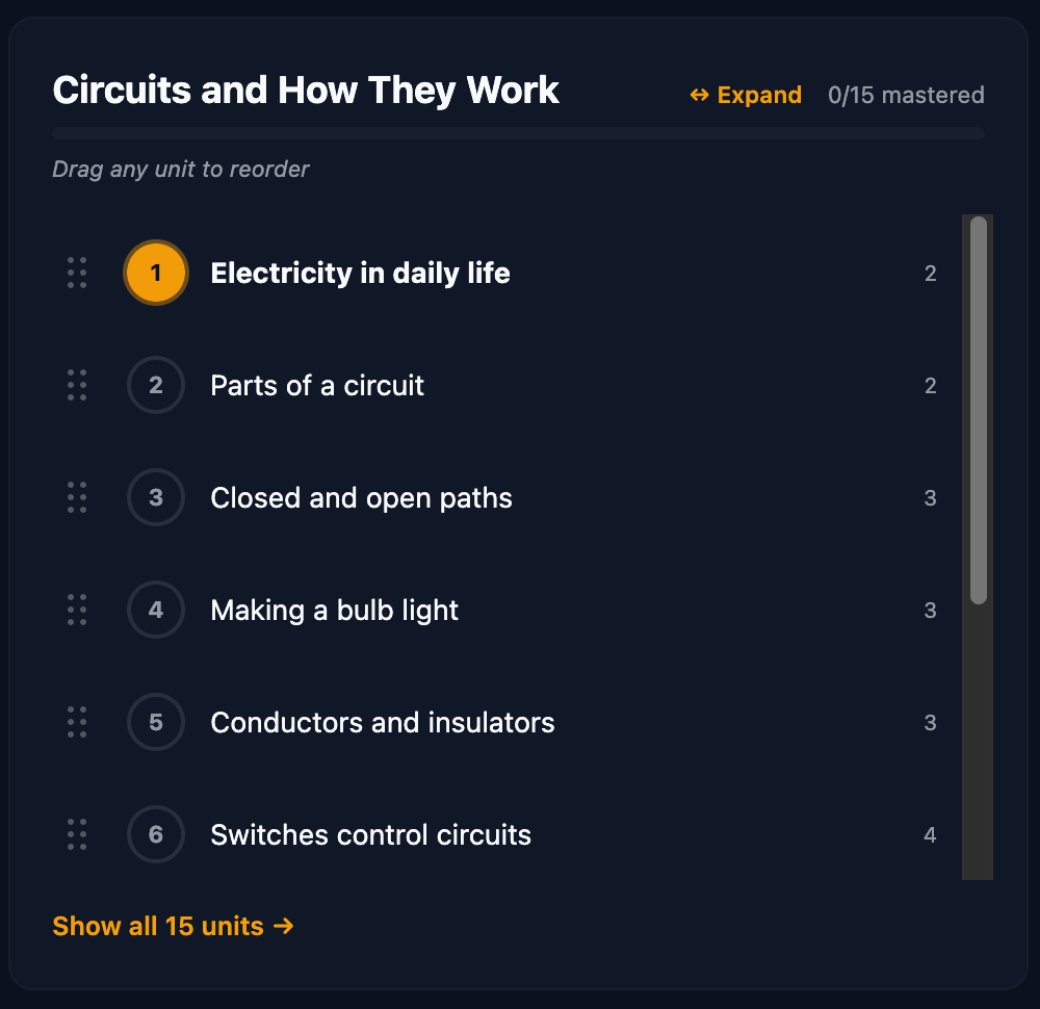
A custom topic path titled Circuits and How They Work, listing its first six units

A course from any sentence they say at dinner

Type what they want to learn, in their words, and Primer builds a sequenced path. Theo got fifteen units on how circuits work. Maya got eighteen on becoming a horse veterinarian. Each runs like any other skill, with full lessons and exit tickets, alongside the core subjects rather than instead of them.

You decide what they study →
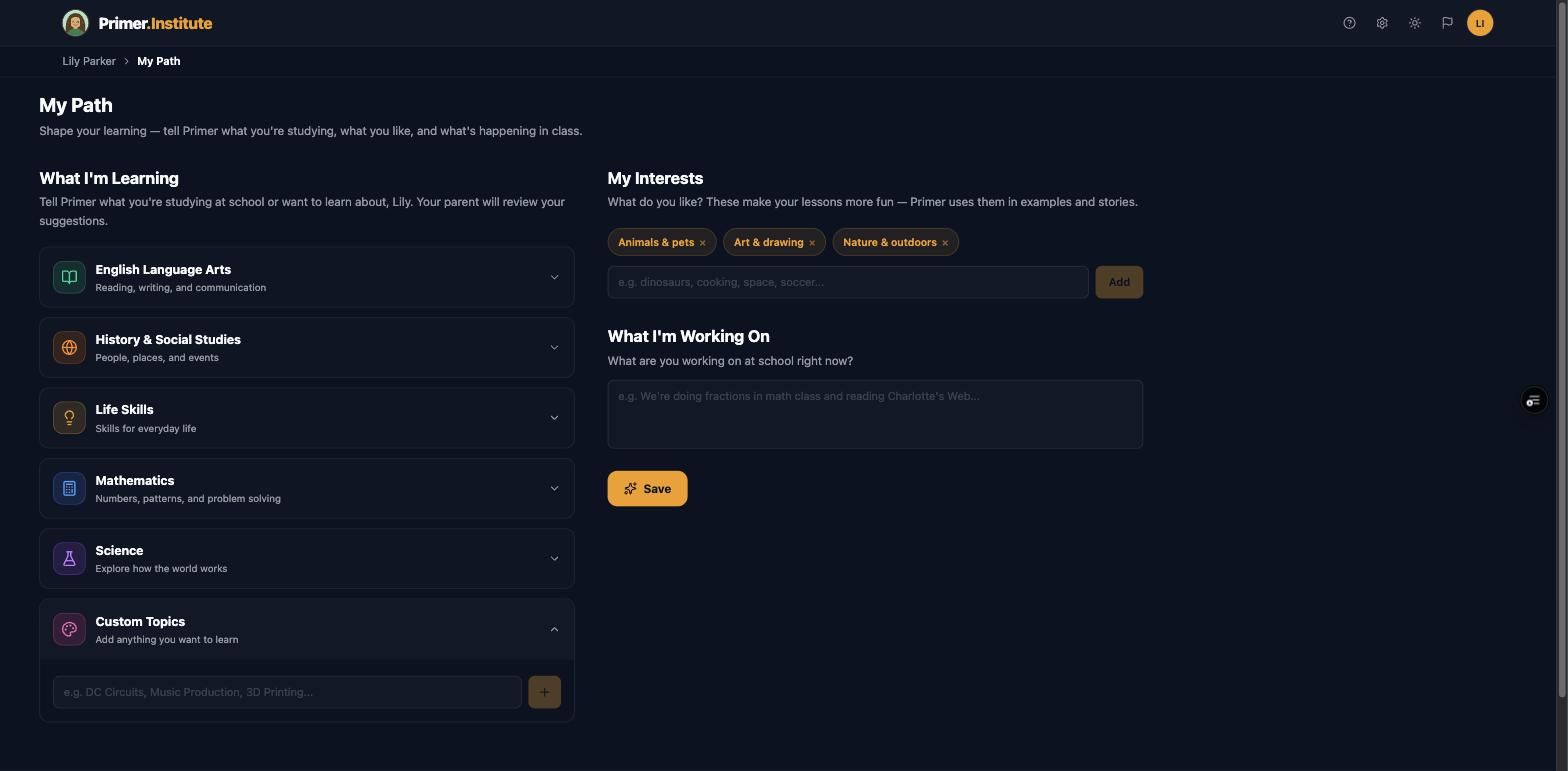
The student portal showing My Path with a custom topic added by the student

A student portal where they add their own topics

Invite your student to their own sign-in. On their portal they see their path, launch their lessons, and, if you allow it, use Add a Topic to put their own questions on the curriculum. How much say they get is a setting you control.

Inviting a student to their own portal →
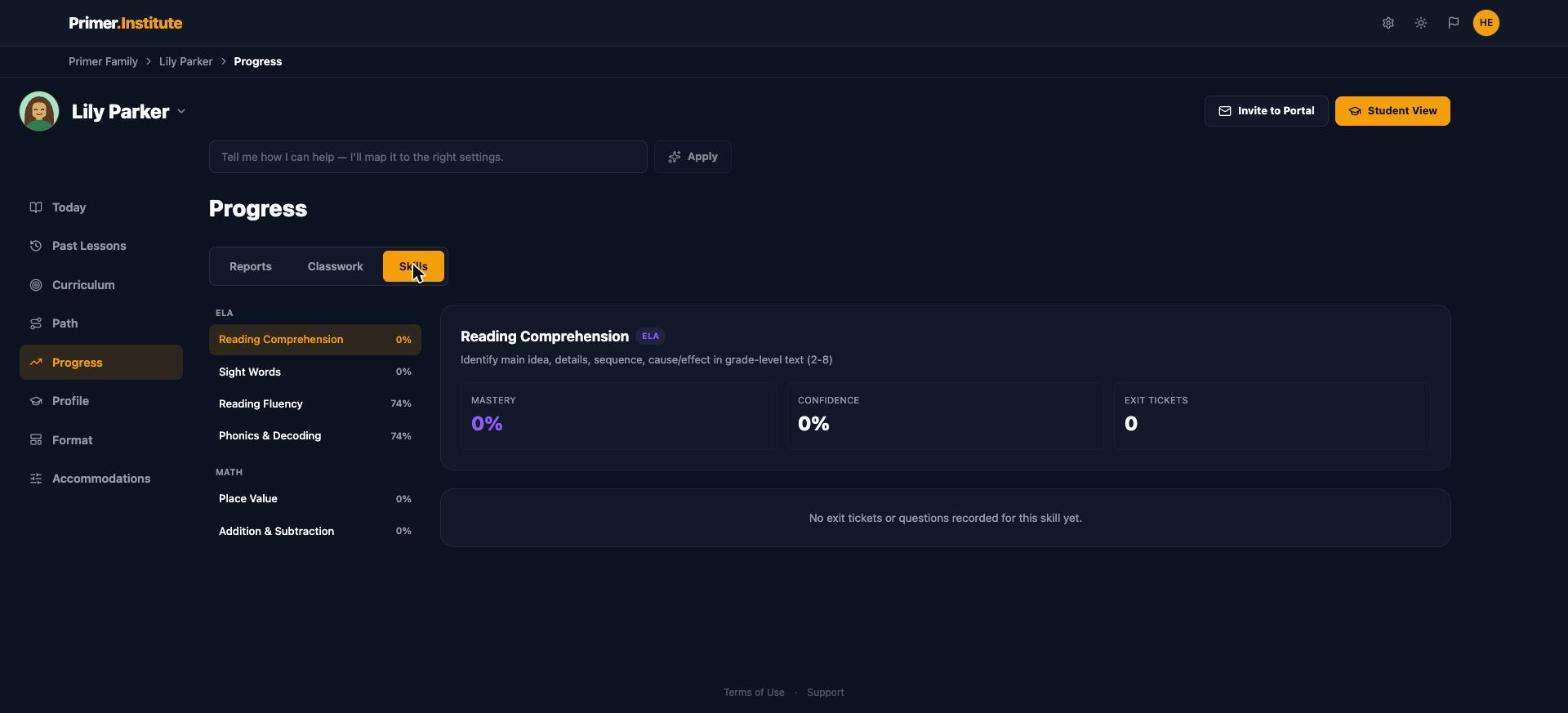
The Skills tab showing Mastery, Confidence, and Exit Tickets for one skill

Depth you can read, skill by skill

Progress breaks down to the individual skill, with a mastery number weighted toward recent work, a confidence number that says how much evidence is behind it, and every exit ticket question on record. Recurring Misconceptions shows the one kind of mistake an advanced student keeps making, which is usually the most useful thing to know about them.

Understanding your student's progress →
Getting started

Set it up once. It adapts from there.

  1. Try one free lesson first. A first name, an age, one thing they love, and one topic. No account. The lesson opens on your screen in a minute or two.
  2. Tell Primer about them. Five to ten minutes at intake on what they love, where they get stuck, what has helped before, and what you want them to master.
  3. Let them find their starting spot. Offer the Starting Point Check on each subject, or pick the starting unit yourself, then generate the first batch.
  4. Read the week. A written summary lands every week, with the numbers behind it a click away, and a teacher you can email.
$40 per student, per month
  • Full K through 12 curriculum
  • About 100 lessons a month
  • Read-aloud and dyslexia-friendly mode
  • Weekly parent progress summary
  • 14-day free trial, cancel anytime
Start Free Trial
Questions parents ask

Before you decide

Can my ten-year-old take high school classes in Primer?

Yes. The grade band filter picks the list of skills you browse, not the student. Add any skill from any band, and the path opens at the rung its typical grade would start on. The lesson is still written around your student's interests and reading level.

How does Primer decide a skill is mastered?

From exit tickets, the short scored check at the end of every lesson. Mastery is a moving average weighted toward recent work, and Primer does not call a skill mastered until three consistent exit tickets say so. You can also mark any unit mastered by hand.

Will an advanced reader get lessons that are too easy?

Not if you place them. Offer the Starting Point Check on each subject or pick the starting unit yourself, and tested-out units are skipped. If the first lessons at a new starting point are too hard, Primer moves the start back and tells you; if they are too easy, mark the units mastered and move on.

Is a custom topic as rigorous as a core subject?

It goes through the same machinery: a sequenced path you can read and edit, full five-step lessons, read-aloud, a video, and an exit ticket. It is a course, not a credential; for a transcript line, use the standards-aligned subjects and let the custom path be the reason they show up.

See what a lesson written for your kid looks like.

One free lesson, no account: their name, one thing they love, and one topic. Or start a free trial and let them find their starting spot.