Education, reimagined

School tailor made for your student
not the other way around.

A tailor-made K–12 curriculum that learns from every interaction including lessons, questions and answers. No more random worksheets. Just one teacher that remembers everything and adapts.

See it in action

A lesson made just for Theo.

Theo loves baseball, so Primer built his equivalent fractions lesson in the dugout. Every story, example and question in this walkthrough was tailor made for him, and Primer does the same for your student.

Build Fractions with Equal Parts, exactly as Theo saw it. Silent walkthrough, about 90 seconds

How Primer Works

Primer.Institute

Five steps for you to set up. Five for your student, every lesson.

How Primer works

You do these five once.

  1. Add Your Student. Just a name and a date of birth. The intake comes next.
  2. Tell Primer About Them. Five to ten minutes on what they love, where they get stuck, and what you want them to master.
  3. Set the Curriculum. Choose the subjects, then the skills inside them. Kindergarten through high school.
  4. Review the Path. The ladder of units they will work through. Reorder, skip, or mark mastered any time.
  5. Generate the Lessons. The easy part, once the path is set. See the batch before it builds.
  6. Or Let It Keep Going. Leave auto-generation on and the next batch queues itself. Turn it off to review first.

They do these five every lesson.

  1. Lesson. Read and listen. Charts, illustrations, word pronunciations, and a matching video where one fits.
  2. Unplugged. Off the screen. About five minutes with paper and pencil.
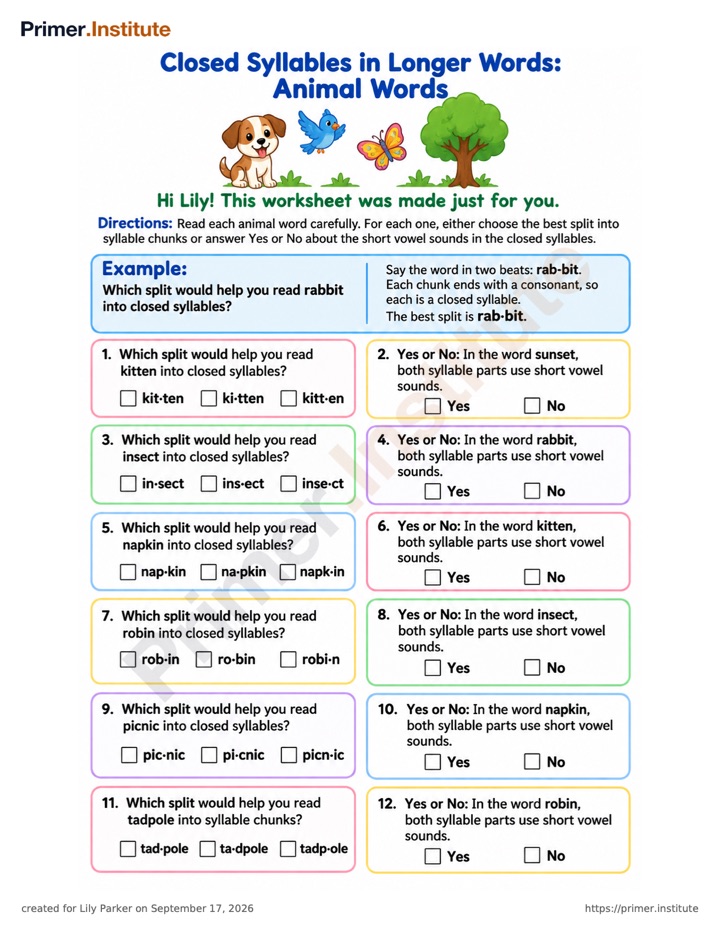
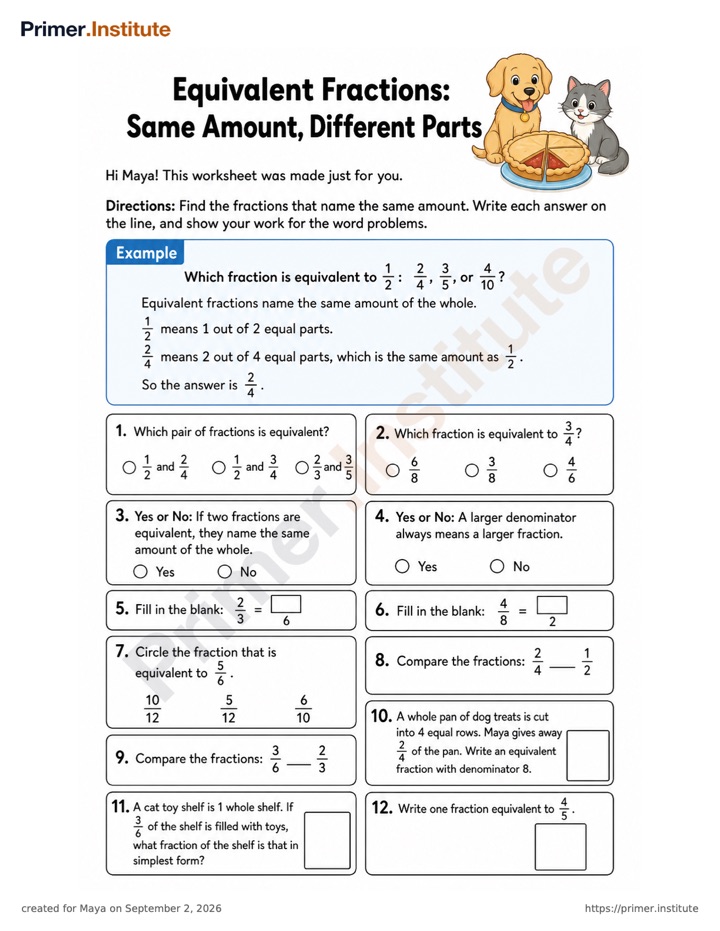
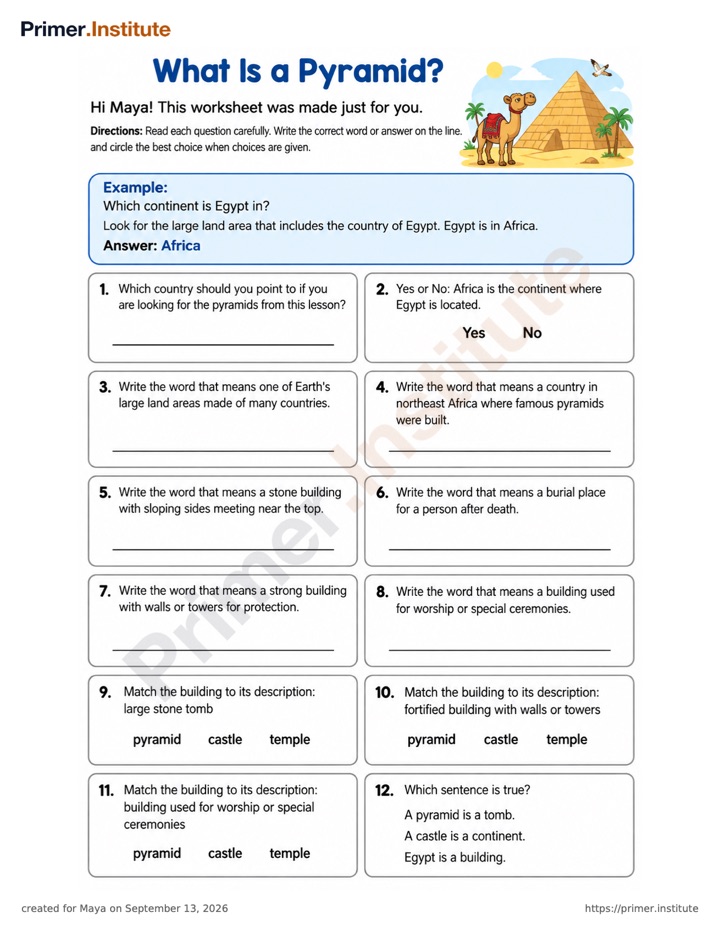
  3. Plus a Worksheet. Print it or use an iPad. Built from this lesson, addressed to them by name.
  4. Puzzle. A crossword built from the lesson, so the new words have to be recalled, not just recognized.
  5. Practice. Five questions with no pressure, to find the shaky spots before the one that counts.
  6. Exit Ticket. The real check. How they do here decides what tomorrow's lesson looks like.
Why we built this

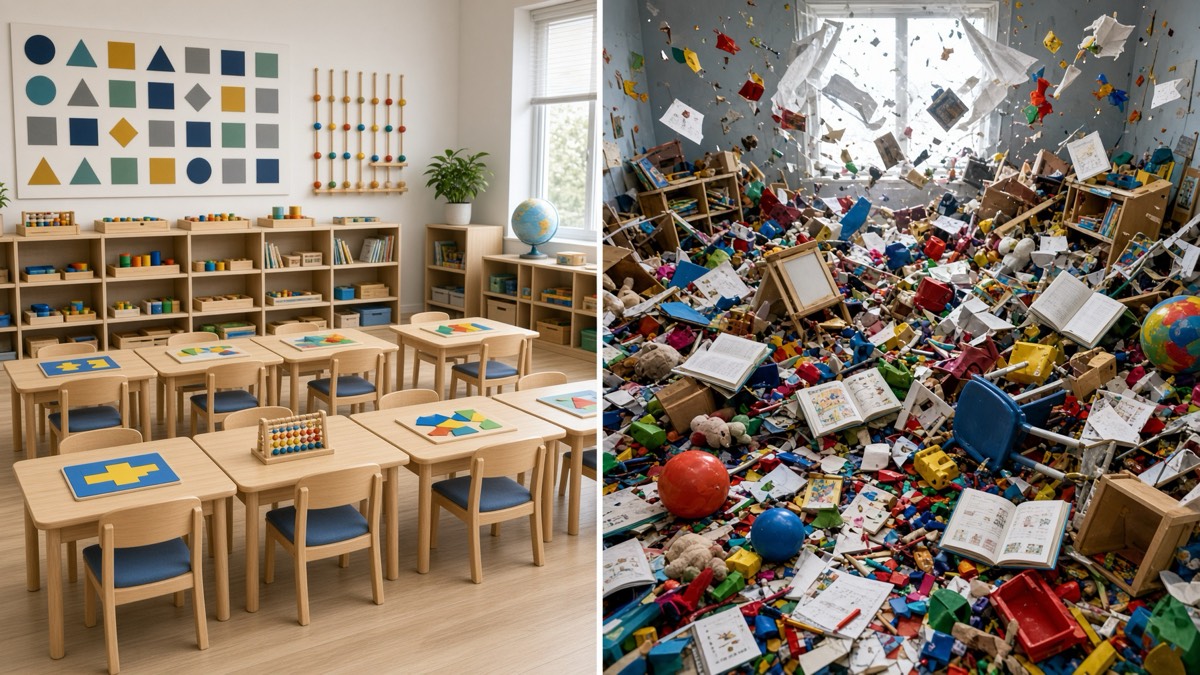
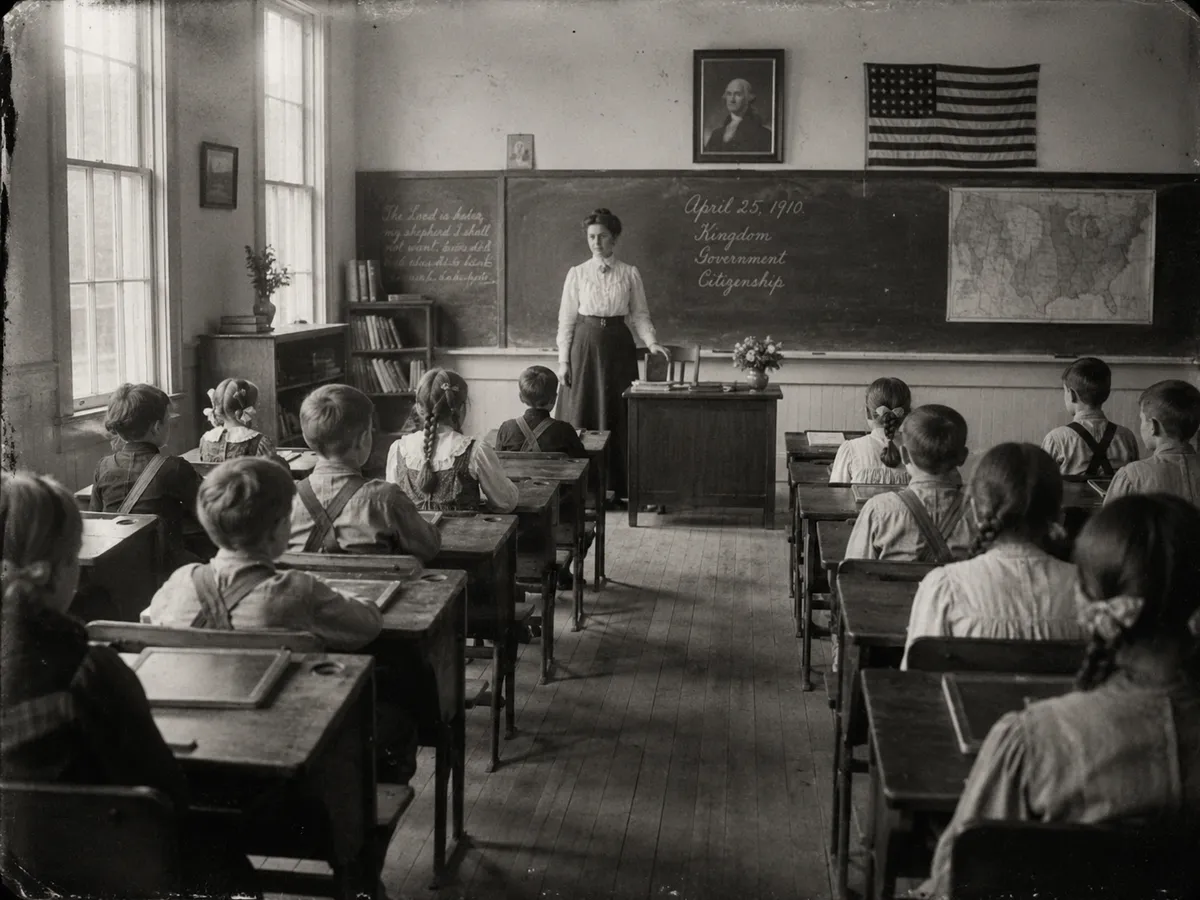
Education hasn't changed since the 1950s.

One teacher. Thirty students. One pace. One curriculum.

We now have the ability to customize learning for each student based on their goals, their passions, their pace. So why aren't we?

We built Primer for our own children, because every student deserves a school built around who they are and what they want to be.

Children seated in rows of wooden desks facing a single teacher at a blackboard, photographed in 1910.
What makes it different

A teacher that remembers everything.

Every lesson is built from what your student knows, loves and needs next. The system gets sharper with every answer.

Personalized to passions

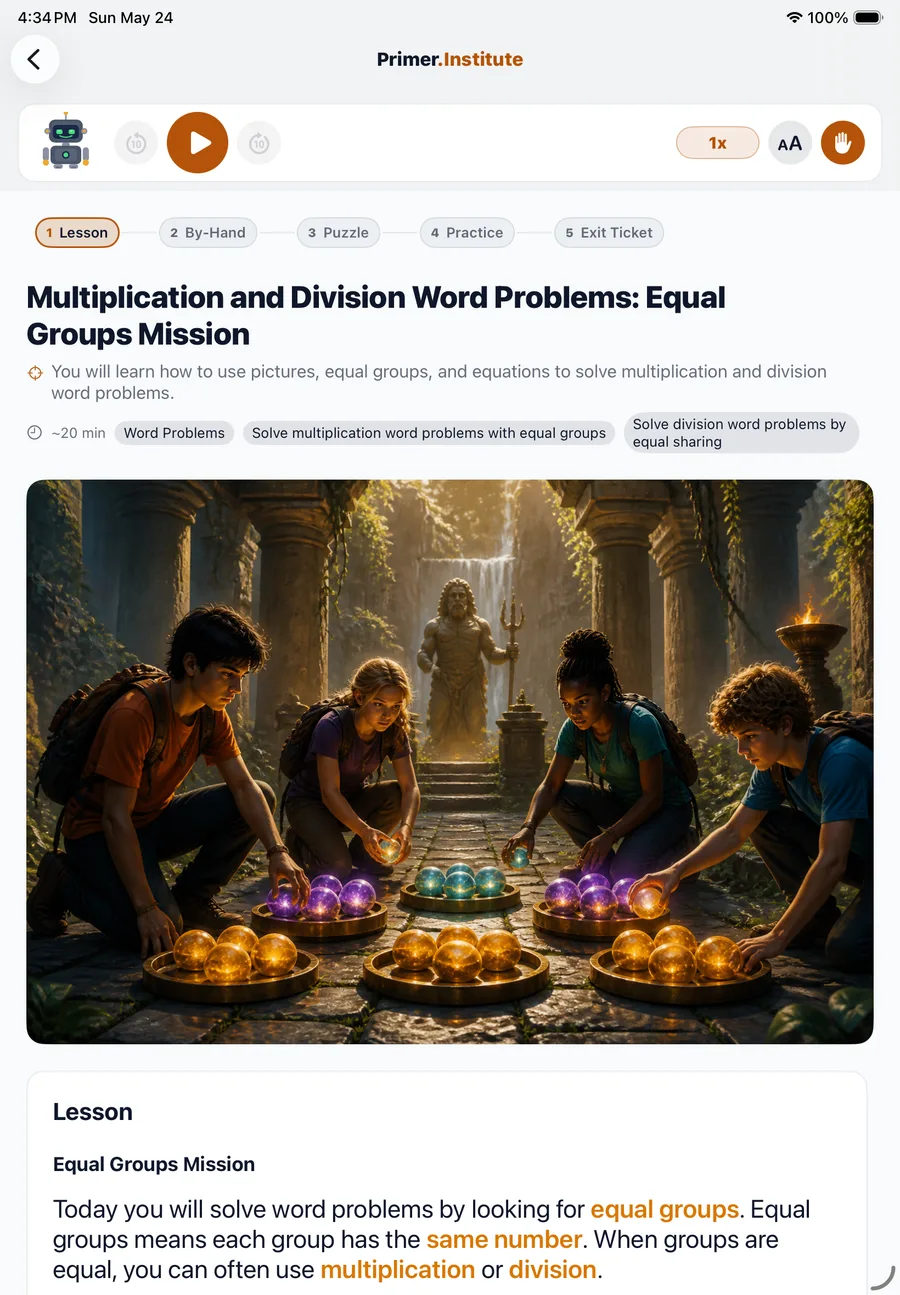
Lessons are themed around what your kid actually cares about skateboarding, sea turtles, robotics, art. Engagement isn't a nice-to-have. It's the curriculum.

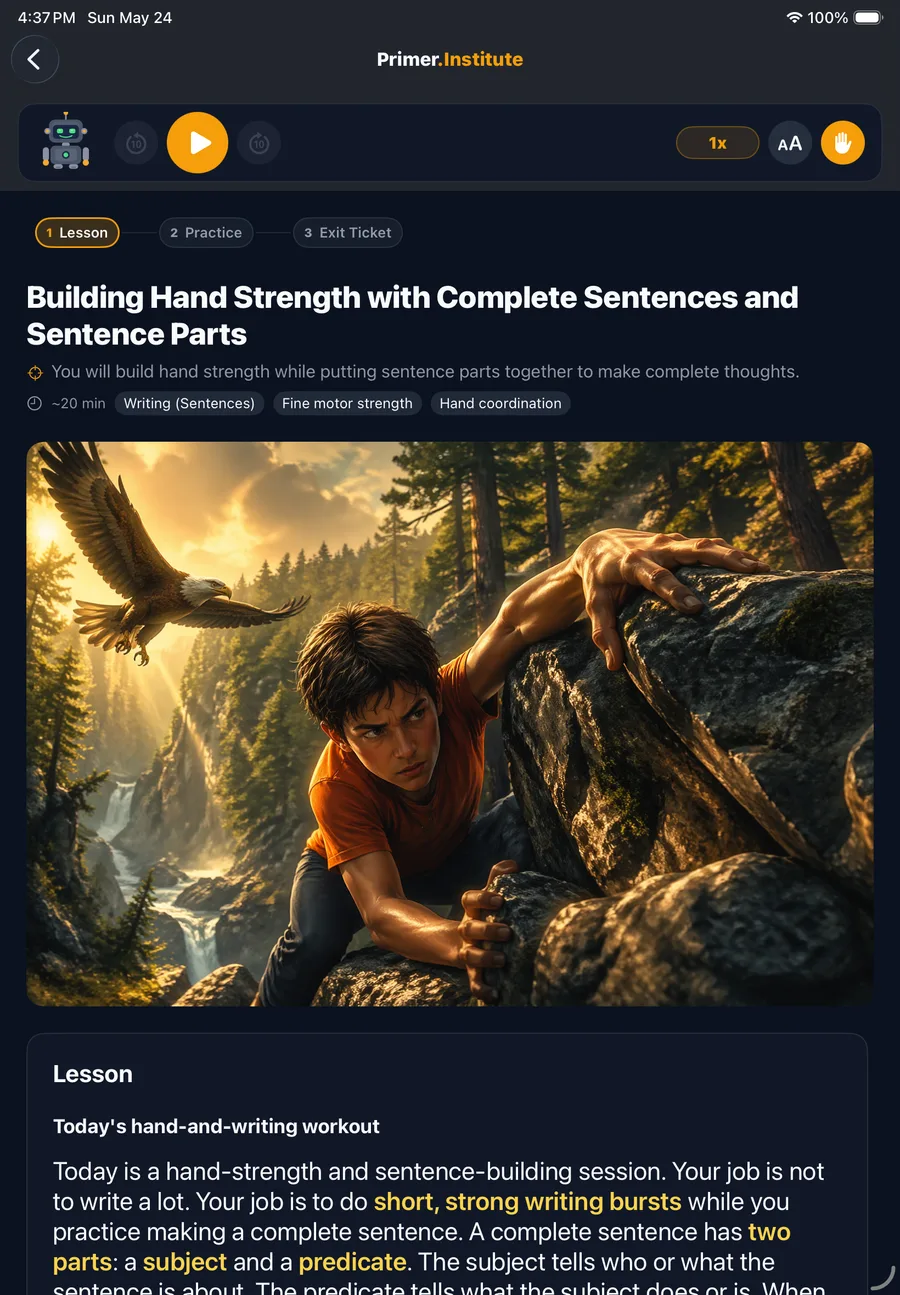
A lesson framed as an adventure: a young climber scaling a cliff with an eagle in flight

Memory across every lesson

A teacher that remembers every question, every missed answer, every breakthrough. Future lessons reinforce what your student got wrong and skip what they already know.
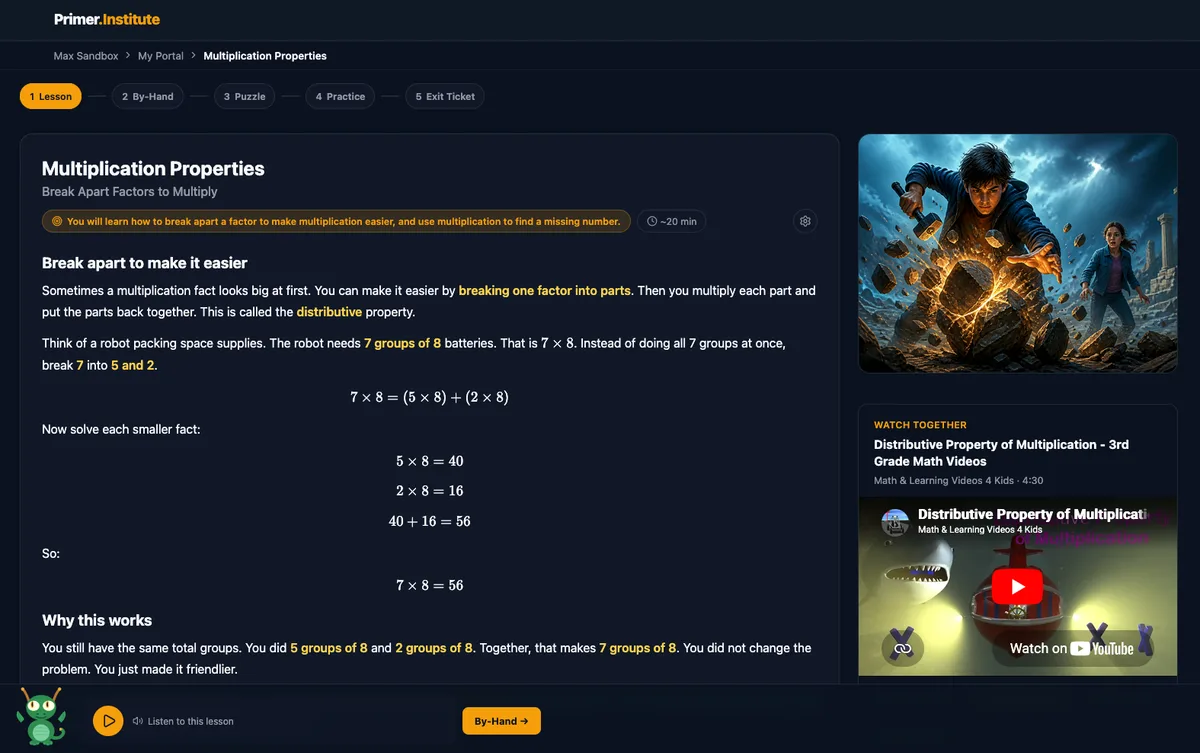
A multiplication properties lesson with worked examples

Multiple ways to learn each lesson

Lesson content, off-screen activities, puzzles, practice. Every format reshapes itself around your student so the same idea lands from every angle.
A number sequence puzzle asking the student to find the missing terms

Off-screen breaks, built in

Every lesson includes a hands-on break drawing maps, measuring rooms, building with what's around them. Screens earn their place; they don't replace doing.
A by-hand off-screen activity instruction card

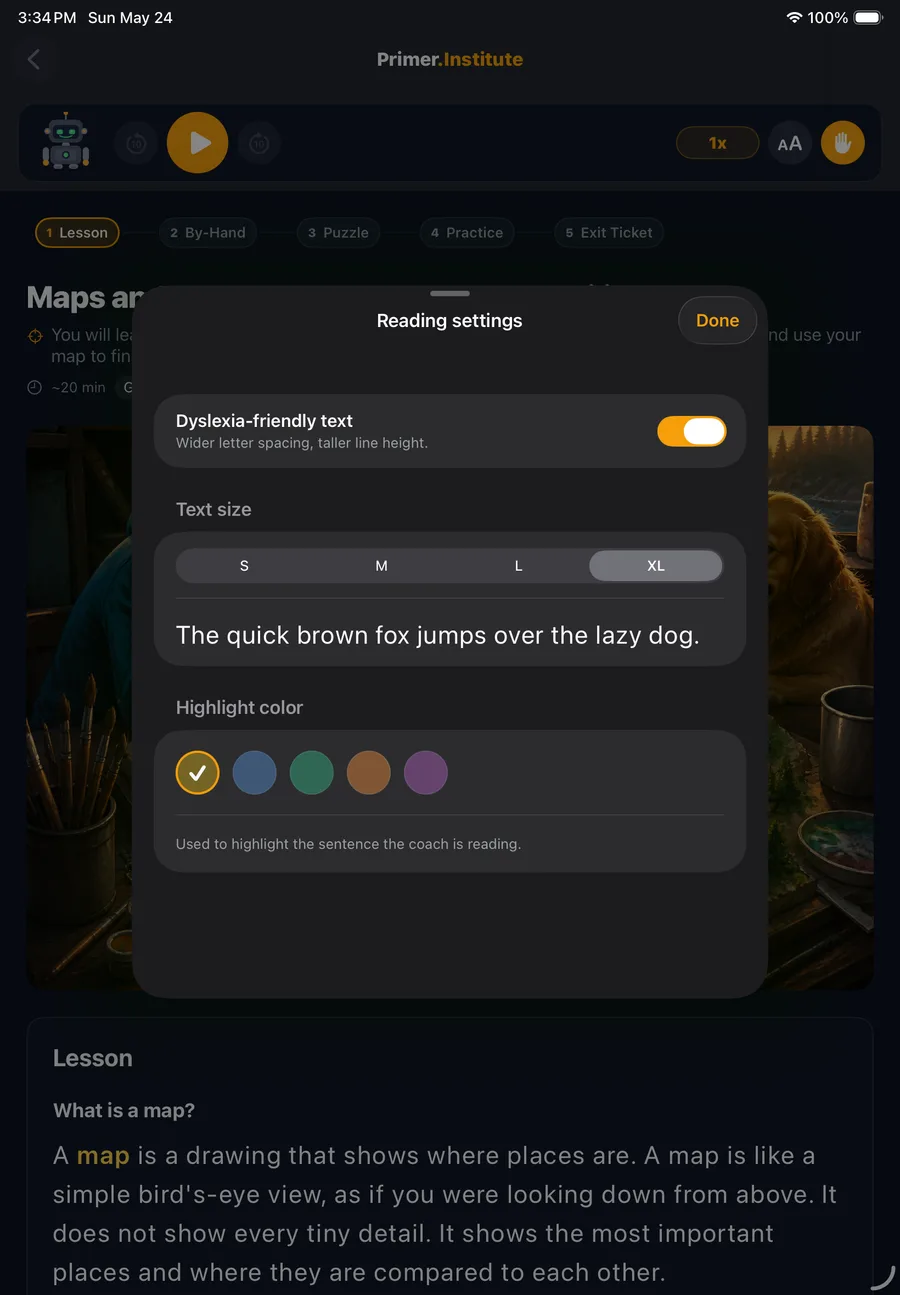
Built for every kind of learner

Focused therapy-style lessons plus per-student accommodations dyslexia-friendly type, adjustable size, sentence-level highlights, read-aloud. Designed to feel native, never like a tool for kids who "need help."
A maps and models lesson with kids studying a 3D village map

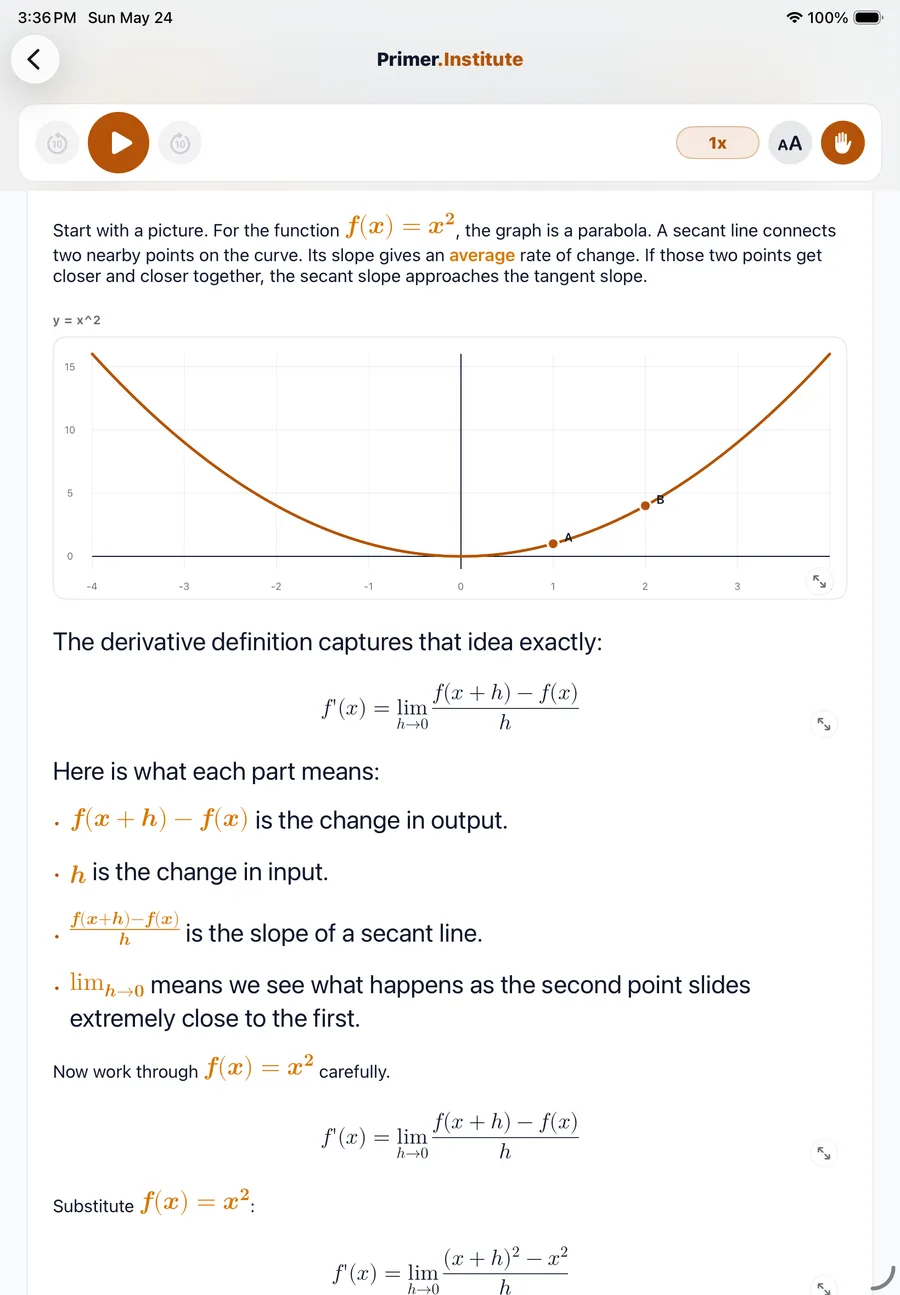
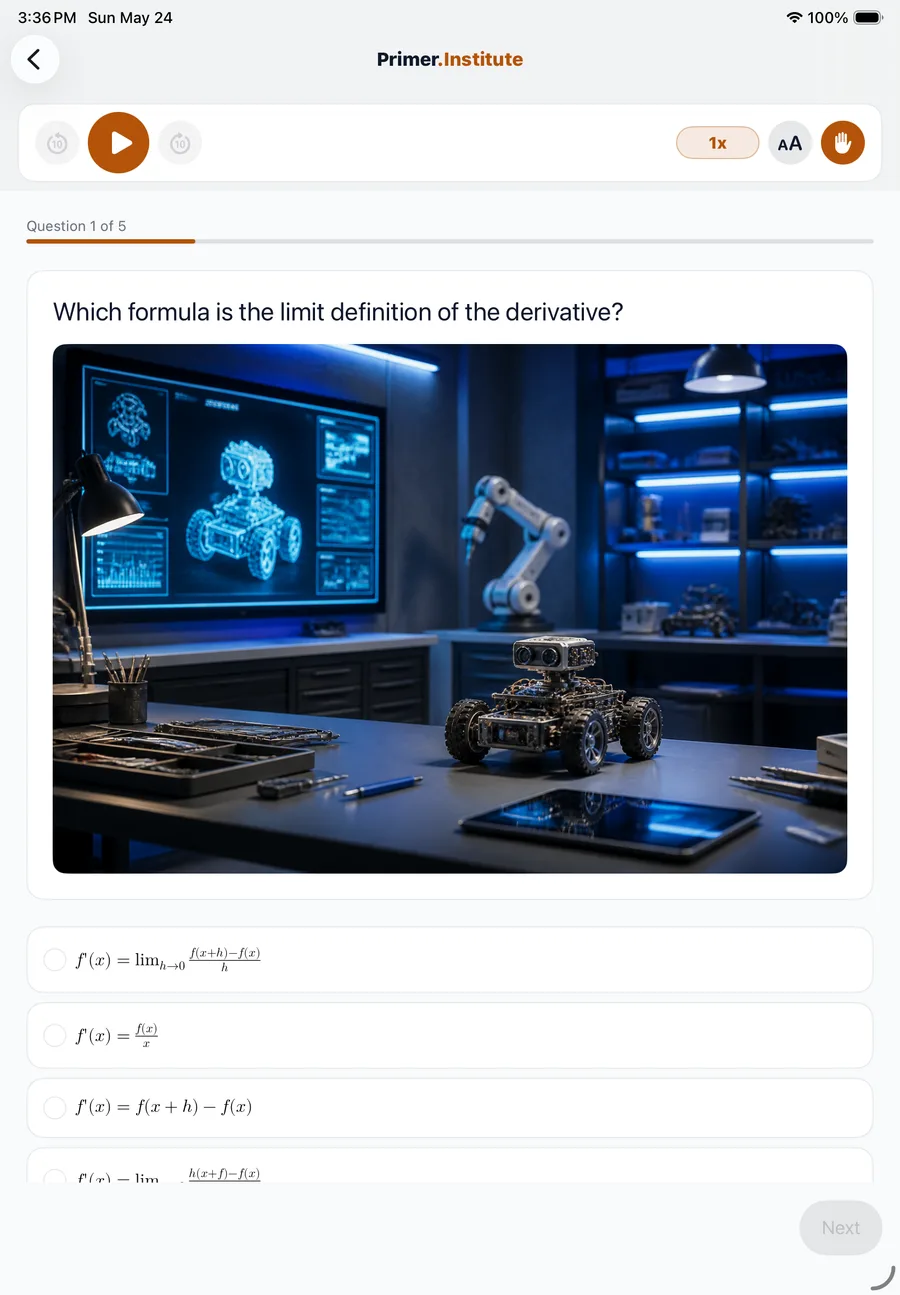
Goes as deep as they go

From learning what a map is to working through the limit definition of a derivative. Primer scales from kindergarten foundations to high-school calculus, in one place.
A calculus lesson with worked derivative example
Stay in the loop

Want to learn more?

Get occasional updates on Primer such as how-to videos, lesson ideas, family stories, and what we're building next. No spam. Unsubscribe anytime.

Available everywhere

Learn on the web.
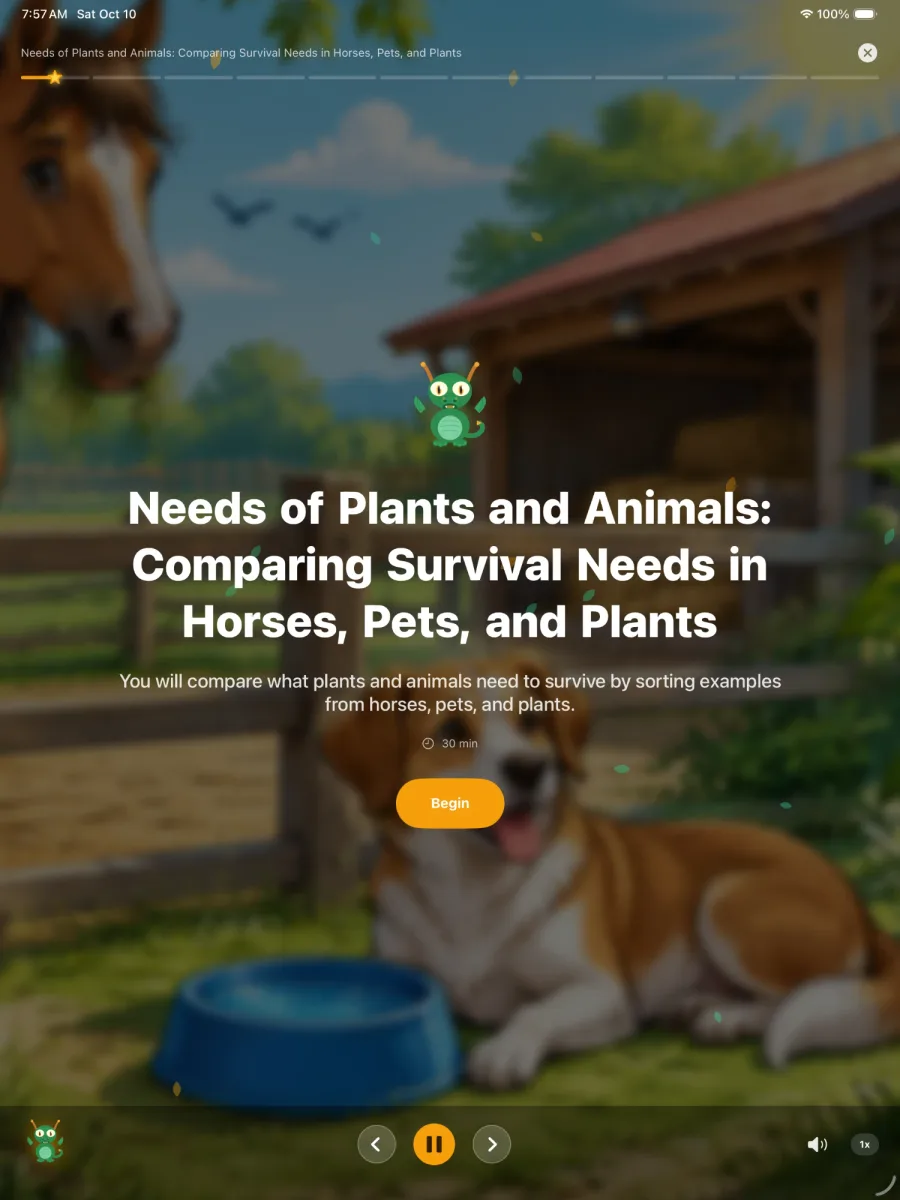
Learn on iPad.

Primer works the same in any browser as it does on iPad. Students pick up where they left off whether that's the laptop in the morning or the iPad at the kitchen table after lunch.

Web app on any modern browser Native iPad app via the App Store
An informational text lesson about sea turtles, with sentence-level reading practice and a video resource
Reading that sticks

Real passages. Real questions. Real practice.

Every lesson combines a written passage, a guided read-along, a "watch together" video, comprehension checks, and a written exit ticket. Reading isn't a worksheet anymore it's a conversation.

Read-along audio Vocabulary highlights Comprehension checks Curated video
LESSONS THAT ADAPT

The right question, every time.

The lesson is themed for your student and chosen to target what they actually need. Get an answer wrong? The next lesson will adjust accordingly.

Adaptive practice Mastery tracking Exit tickets Weekly summary for parents
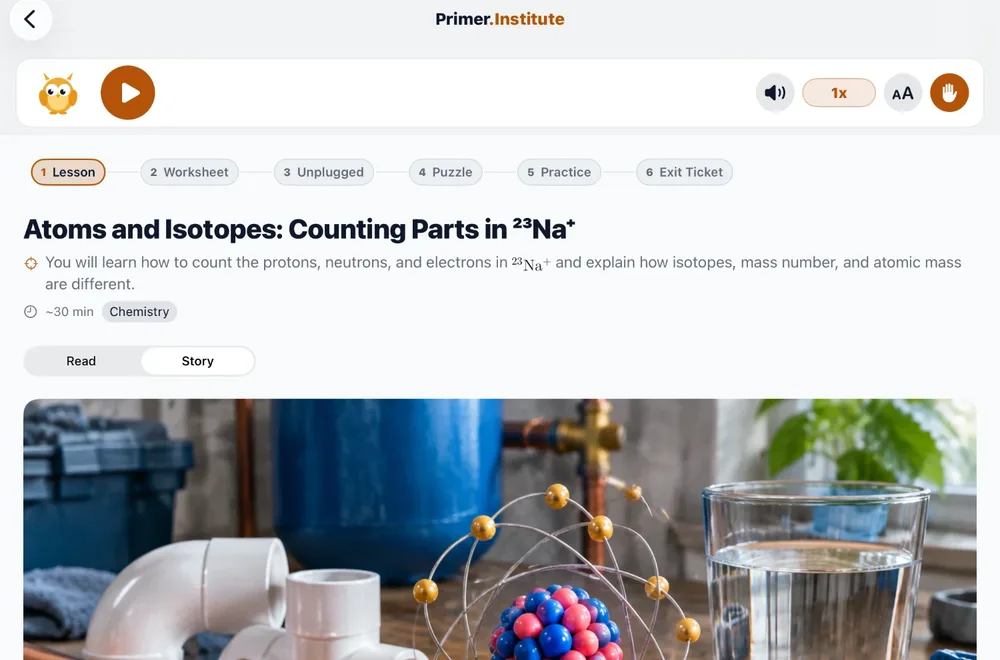
A multiplication and division word-problems lesson framed as a temple adventure
A young student filling out a Primer worksheet on an iPad using Apple Pencil
Now on iPad

Write it out, right on the screen.

Every worksheet Primer generates can be filled out directly on iPad with Apple Pencil or any compatible stylus, no printer required. Download the app and your student can go from lesson to practice without ever leaving the table.

Apple Pencil support No printer needed Syncs with the web app
Custom topics

You decide what they study.

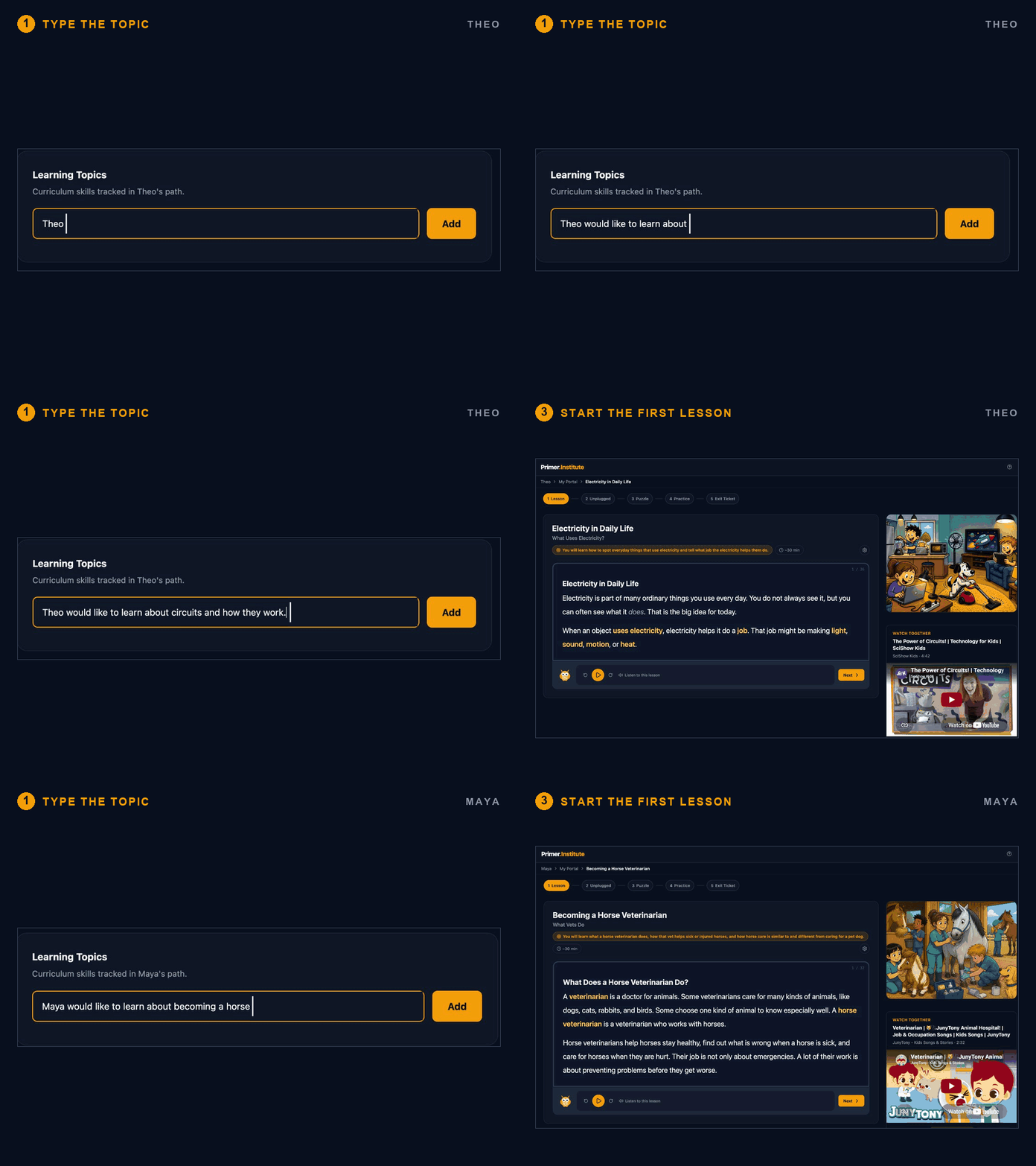
Type one sentence about what your student actually wants to learn, and Primer turns it into a sequenced course. Theo got 15 units on how circuits work. Maya got 18 on becoming a horse veterinarian. Both run alongside their core subjects, not instead of them.
Any topic, any age Sequenced skill units Reorder, skip or mark mastered Alongside core subjects
An animation running the same three steps for two students. For Theo, the sentence Theo would like to learn about circuits and how they work is typed into the Learning Topics box, Primer builds a path called Circuits and How They Work, and unit one opens as a lesson on Electricity in Daily Life. For Maya, the sentence Maya would like to learn about becoming a horse vet produces a completely different path, Becoming a Horse Veterinarian, opening on What Vets Do.
Simple pricing

One price. Every subject. Every grade.

No tier games. No upsells. Pay for the students you have.

200 risk-free credits
$40
Per student, per month

Free for 14 days with 200 risk-free credits.

  • Full K–12 personalized curriculum
  • 1,000 credits/mo (~100 lessons)
  • Adaptive lessons, puzzles and practice
  • Off-screen activities
  • Read-aloud + dyslexia-friendly mode
  • Weekly parent progress summary
  • Supportive therapy-style lessons
  • Cancel anytime, no contracts

Take control of your student's future.

Spend ten minutes telling us about your student. Primer builds the rest: a full, personalized curriculum, ready on day one.
Get in touch

Questions? Curious? Skeptical? Great!

We built Primer because we needed it for our students. We'd love to hear what you're looking for and whether we can help.