Reluctant learners

Homeschooling a Kid Who Hates Worksheets

You are not fighting about fractions. You are fighting about sitting down. The packet is generic, the passage is about nothing, and your kid has correctly figured out that none of it has anything to do with them. A reluctant learner is usually a kid who has not yet been handed a lesson that was actually theirs.

Their interests in every lesson Hands-on break every lesson Their questions count as school A coach instead of a parent
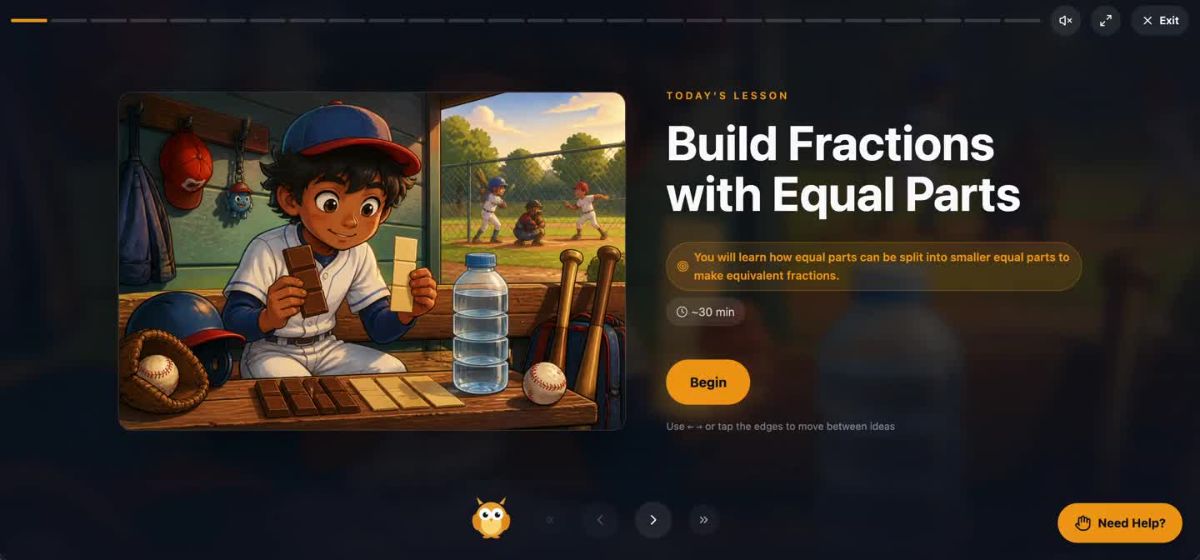
The title page of a fractions lesson set in a baseball dugout, built for a student who loves baseball
What actually helps

The fix for a reluctant learner is not more motivation. It is a lesson they would choose.

Each of these rests on learning science that has been replicated for decades. The studies, in plain language, are on the research page.

1

Put the subject inside their world

When material connects to a student's own life, engagement rises and so do grades, and the largest gains go to the students who struggle most. Fractions taught in a dugout are not a bribe for finishing the fractions. They are the fractions.

2

Let their question be the curriculum

The thing your kid asked about at dinner carries academic content inside it, in the right order, automatically. Nobody has to convince a kid who wants to bid an electrician's job that percentages matter. When curiosity counts as school, the reluctance has nothing to push against.

3

Get them off the screen and doing

Writing a word by hand, drawing a map, measuring a room: hands-on work uses a different kind of memory than reading or clicking. For a student who disengages on a device, it is often the part where the idea actually lands.

How Primer handles it

Here is what a lesson looks like for a student who would rather be anywhere else.

A fractions lesson title page set in a baseball dugout

Every lesson opens in their world

At intake you tell Primer what your kid loves. Then every lesson is written there. Theo's fractions lesson opens in a dugout. Maya's opens in a stable. A kid who wants nothing to do with reading gets a passage about otters and a cat named Waffles. The objective and the exit ticket are the same; only the world is theirs.

Cinematic lessons →
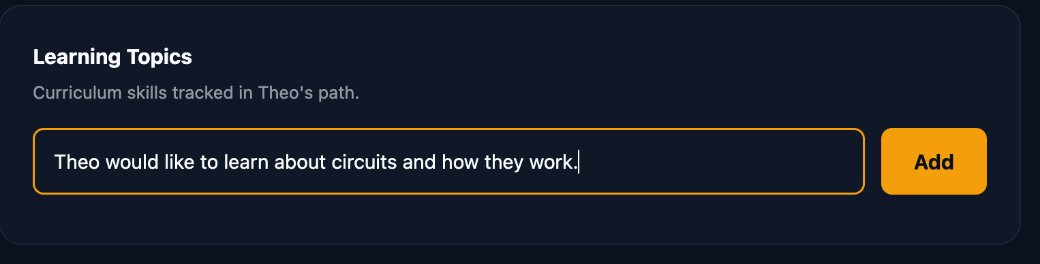
The Learning Topics card with the sentence: Theo would like to learn about circuits and how they work

Their question becomes a real course

Type one sentence in their words into the Learning Topics box. Theo got fifteen units on how circuits work. Maya got eighteen on becoming a horse veterinarian. Each is a full path with full lessons, running alongside reading and math, not instead of them. The thing they are curious about stops being the reward for finishing school and starts counting as school.

You decide what they study →
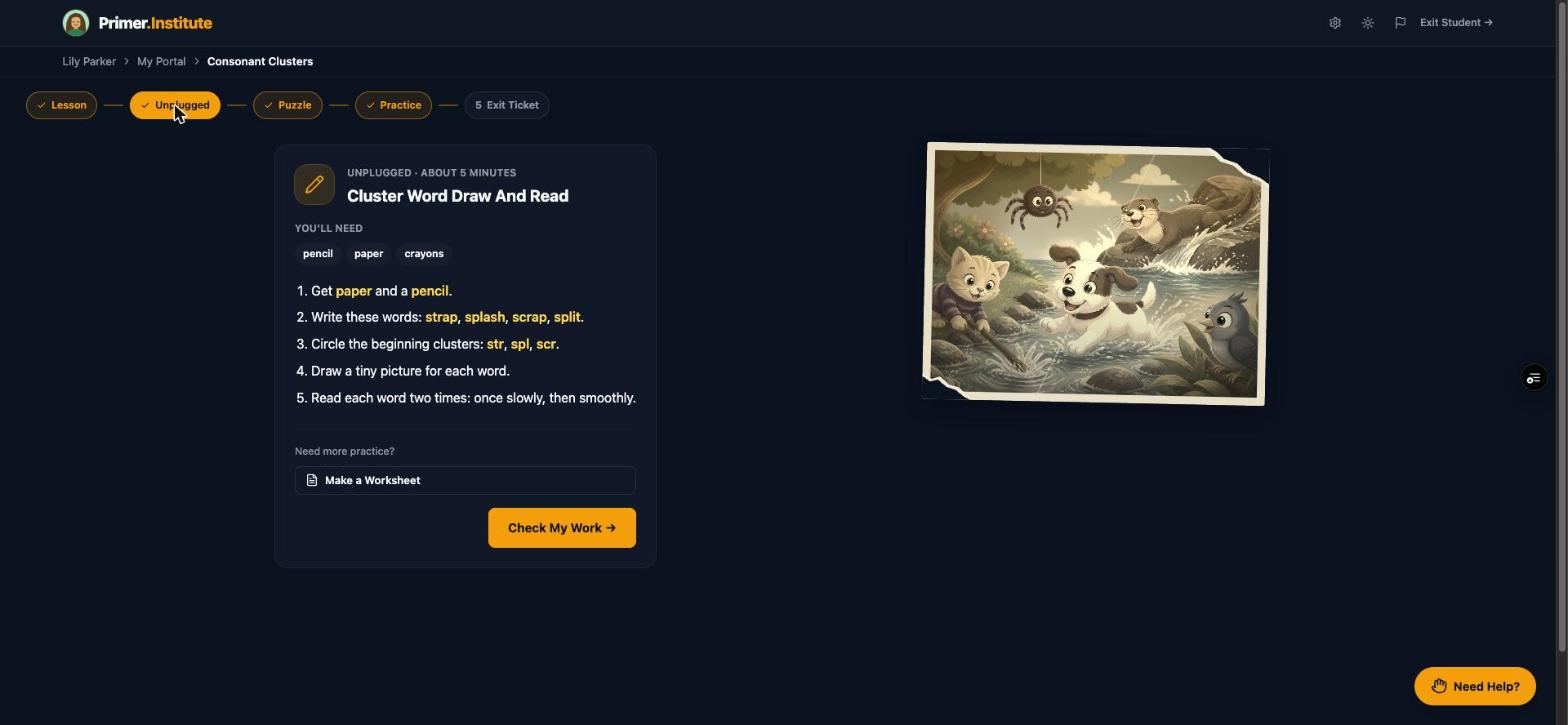
The Unplugged step with materials and numbered instructions

An Unplugged step in every lesson

Five to ten minutes off the screen with pencil, paper, and sometimes crayons, built around the skill the lesson just taught. Then a worksheet with their name at the top and their interests in the problems, on paper or on an iPad with Apple Pencil.

Unplugged activities and worksheets →
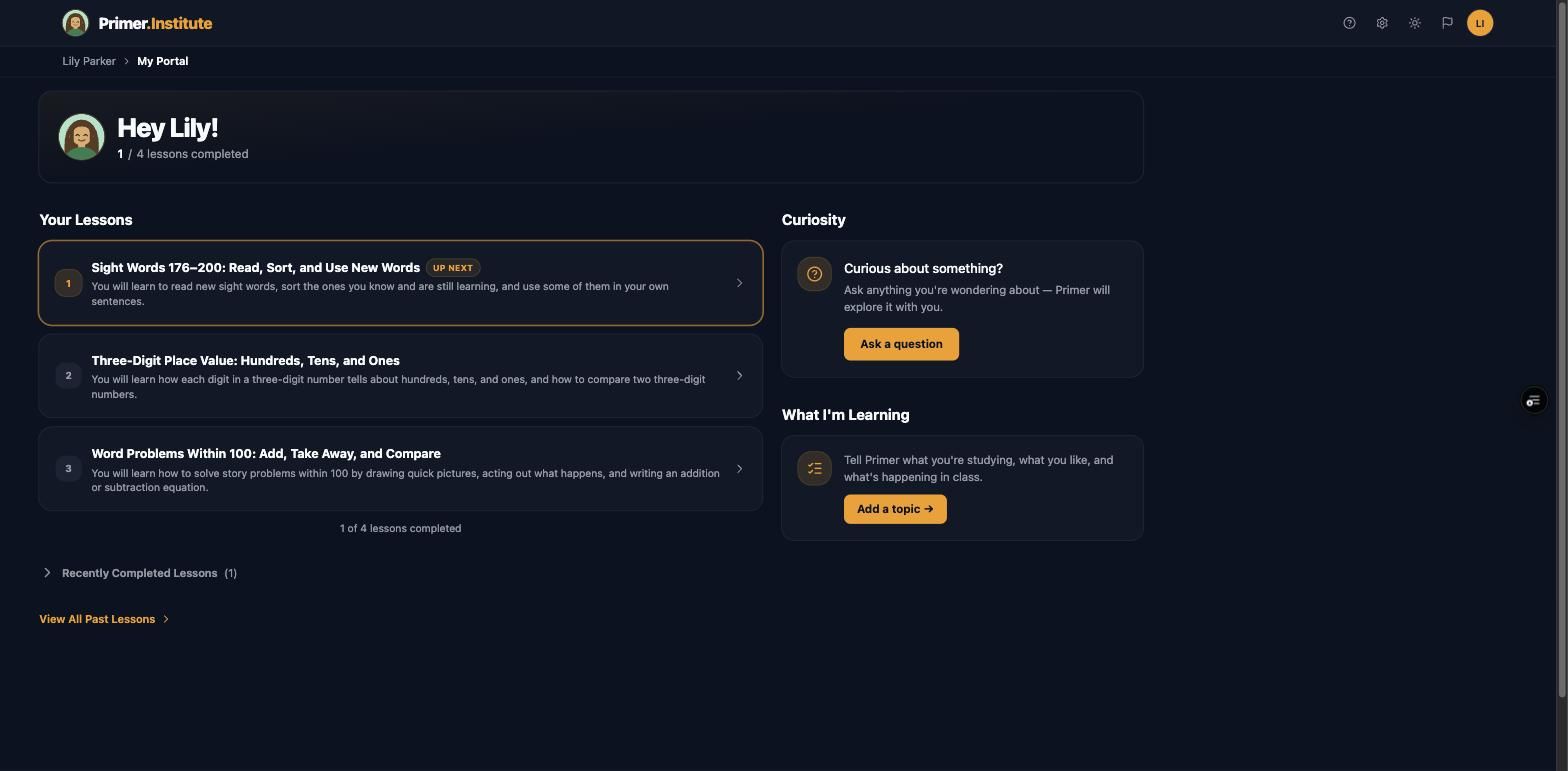
The student portal home screen with the student's lessons and avatar

A portal that is theirs

Invite your student to their own sign-in. They pick an avatar, pick their teacher's avatar, see their path, and launch their own lessons. If you allow it, Add a Topic lets them put their own questions on the curriculum. The fetching stops when the lesson is something they opened themselves.

Inviting a student to their own portal →
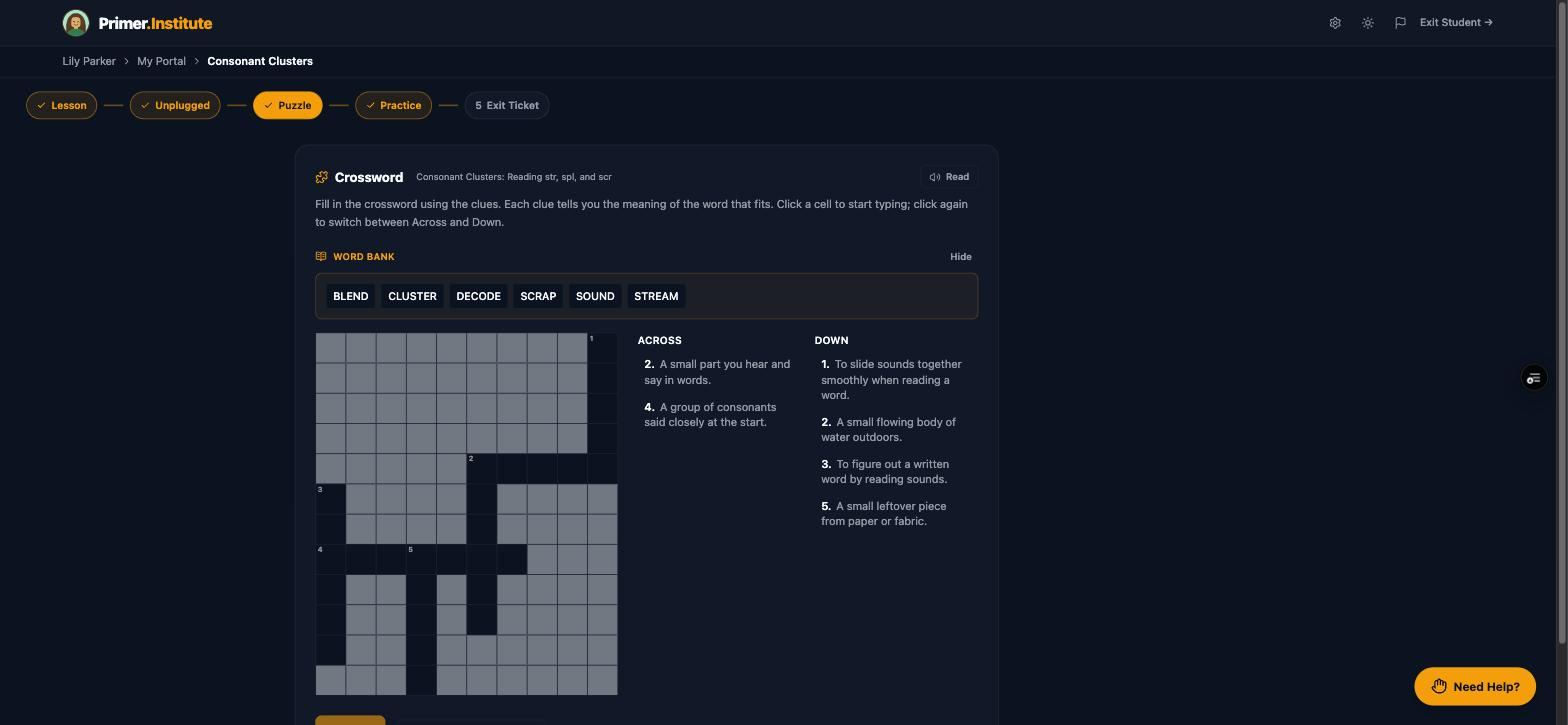
A crossword puzzle built from the lesson's vocabulary

A puzzle, five practice questions, and a short exit ticket

After the Unplugged step comes a crossword built from the lesson's vocabulary, then five no-pressure practice questions with hints, then the exit ticket. A Need Help? coach floats on every step, so getting stuck does not mean calling a parent over. The whole lesson runs about thirty minutes.

Inside a lesson →
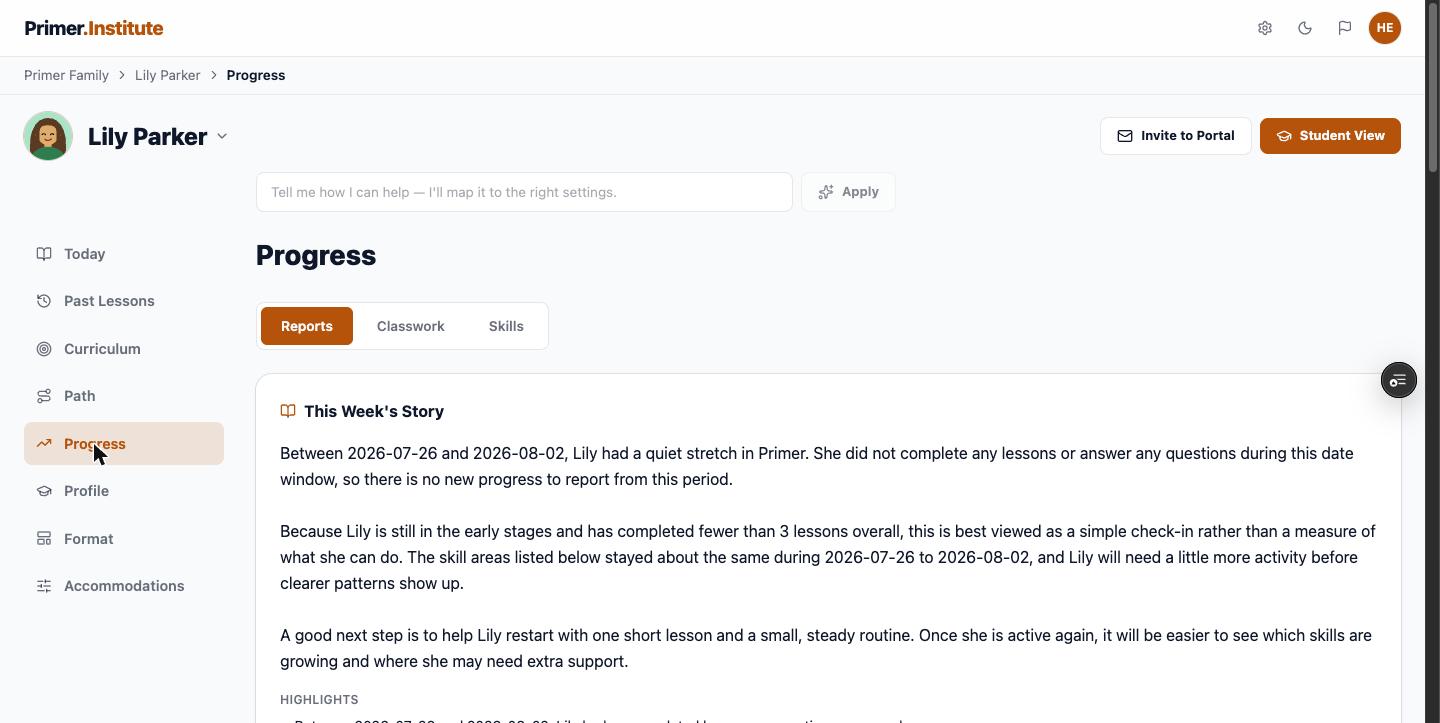
The Reports tab with This Week's Story and Highlights

Celebrations that wait for real evidence

The weekly report calls out units completed, skill milestones, and supports your student no longer needs. Primer deliberately waits for real evidence before celebrating, which is why a reluctant kid believes it. This Week's Story gives you the plain-English version to read together at dinner.

Understanding your student's progress →
Getting started

Set it up once. It adapts from there.

  1. Try one free lesson first. A first name, an age, one thing they love, and one topic. No account. The lesson opens on your screen in a minute or two.
  2. Tell Primer about them. Five to ten minutes at intake on what they love, where they get stuck, what has helped before, and what you want them to master.
  3. Let them find their starting spot. Offer the Starting Point Check on each subject, or pick the starting unit yourself, then generate the first batch.
  4. Read the week. A written summary lands every week, with the numbers behind it a click away, and a teacher you can email.
$40 per student, per month
  • Full K through 12 curriculum
  • About 100 lessons a month
  • Read-aloud and dyslexia-friendly mode
  • Weekly parent progress summary
  • 14-day free trial, cancel anytime
Start Free Trial
Questions parents ask

Before you decide

My kid hates anything that looks like school. Will this look like school?

A lesson opens full screen on an illustration drawn for them, with their interests in the examples, and the stepper shows five short steps. There are worksheets, but they have your kid's name on them and their interests in the problems, and they can be done on an iPad with a pencil. Reluctant kids tend to notice the difference within a lesson or two.

What if they just click through without reading?

Practice questions give immediate right or wrong feedback, and the exit ticket at the end is scored and decides what the next lesson looks like. Reports show how often they asked for help and which questions they miss. The Hybrid delivery mode has you review practice together afterward, if you want a checkpoint.

Can my child choose what they study?

Within limits you set. Intake asks how much say the student gets in choosing topics, and the student portal's Add a Topic puts their questions on the curriculum if you allow it. Reading, writing, math, science, and social studies keep running underneath.

Is there a way to try it without a fight?

Yes. The free lesson takes a first name, an age, one thing they love, and one topic, and writes a lesson in a minute or two with no account. Hand them the result and watch.

See what a lesson written for your kid looks like.

One free lesson, no account: their name, one thing they love, and one topic. Or start a free trial and let them find their starting spot.