
Local Weather Patterns
Made for Alex, with a robot helper
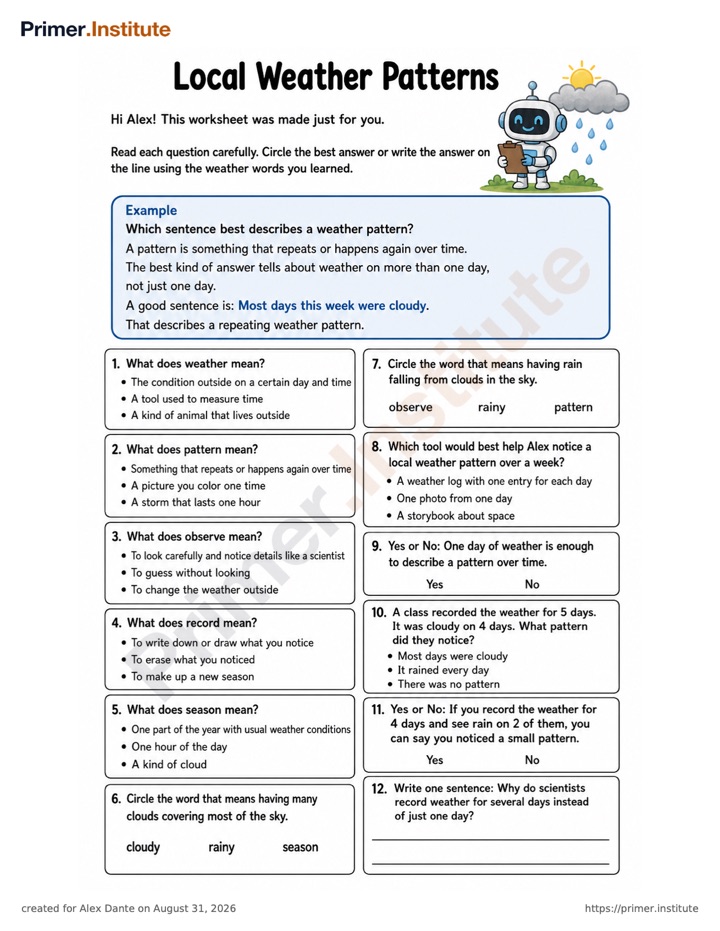
Twelve questions that check the vocabulary from a lesson on noticing weather over time: weather, pattern, observe, record, and season. Alex circles the word for a sky full of clouds, picks the tool that would reveal a pattern across a week, and ends by writing one sentence on why scientists record weather for several days instead of one.
Skills on this worksheet
- Define weather, pattern, observe, record, and season
- Tell the difference between one day of weather and a pattern over time
- Choose a daily weather log as the tool for spotting a pattern
- Read a five-day record and name the pattern in it
- Write a one-sentence scientific explanation
Question types: Vocabulary matching, circle the word, multiple choice, yes or no, and one written sentence.
Three of the questions
- What does observe mean?
- A class recorded the weather for 5 days. It was cloudy on 4 days. What pattern did they notice?
- Write one sentence: Why do scientists record weather for several days instead of just one day?
The answer key gives the answer to every question and, for the worked example at the top, the reasoning behind it.
How it was personalized
Alex has a robot helper in every lesson, so the robot is up top holding a clipboard under a rain cloud, and one question asks which tool would help Alex notice a pattern. The science is the standard early elementary weather unit; the framing is his.
A real lesson, a real student
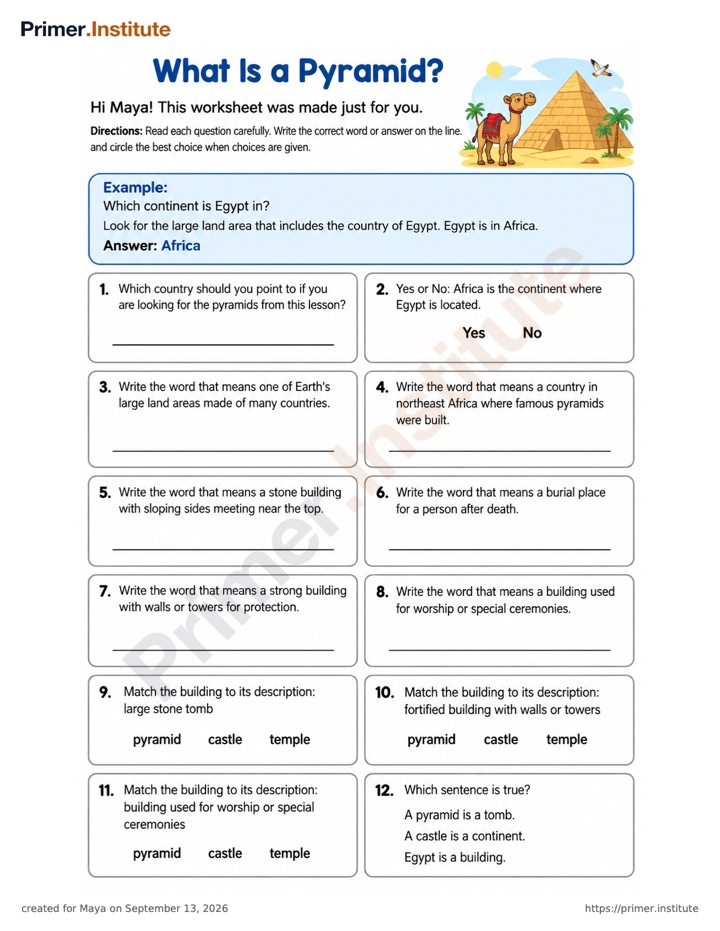
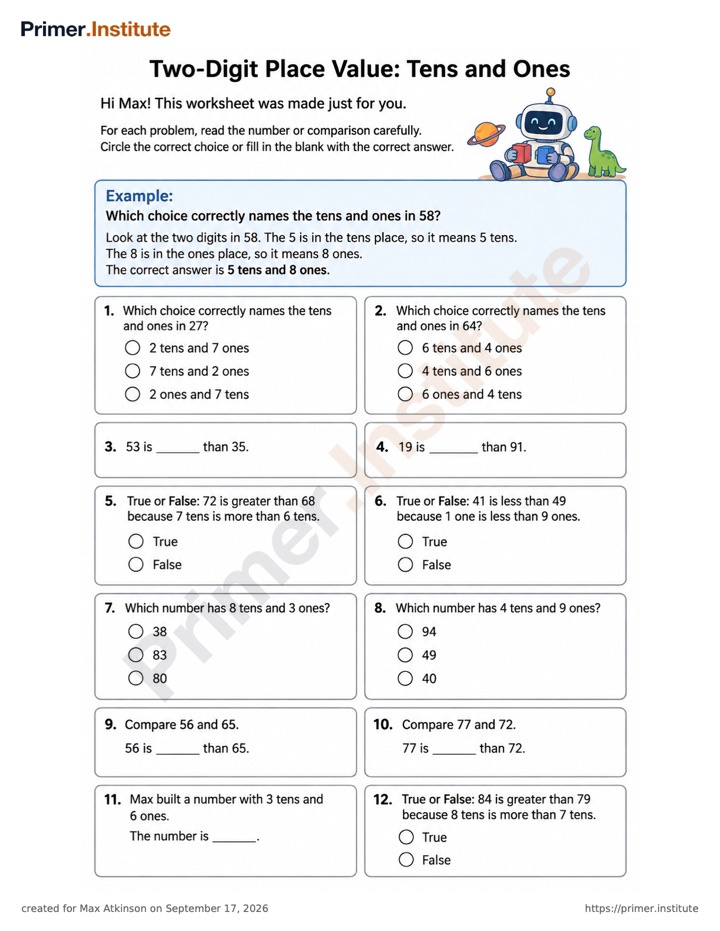
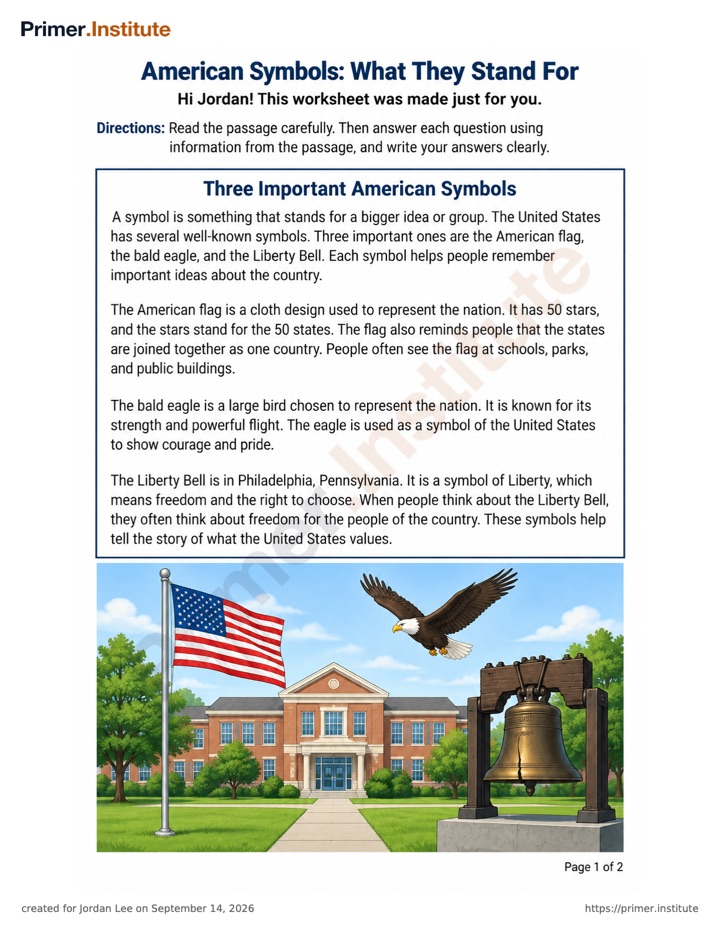
Every Primer lesson has an Unplugged step, and any lesson can turn into a printable worksheet with one tap. This one came out of Alex's lesson on the same topic, so the questions check exactly what the lesson taught, in the words the lesson used. Names, interests, and the illustration come from Alex's profile.
Fill it out on paper, or on an iPad with Apple Pencil, where it is graded letter by letter. How worksheets work in Primer.
Get one with your student's name on it.
Every Primer lesson ends with a worksheet like this one, written for your student and their interests. Try a single free lesson with no account, or start a free trial.