
Closed Syllables in Longer Words: Animal Words
Made for Lily, who loves animals
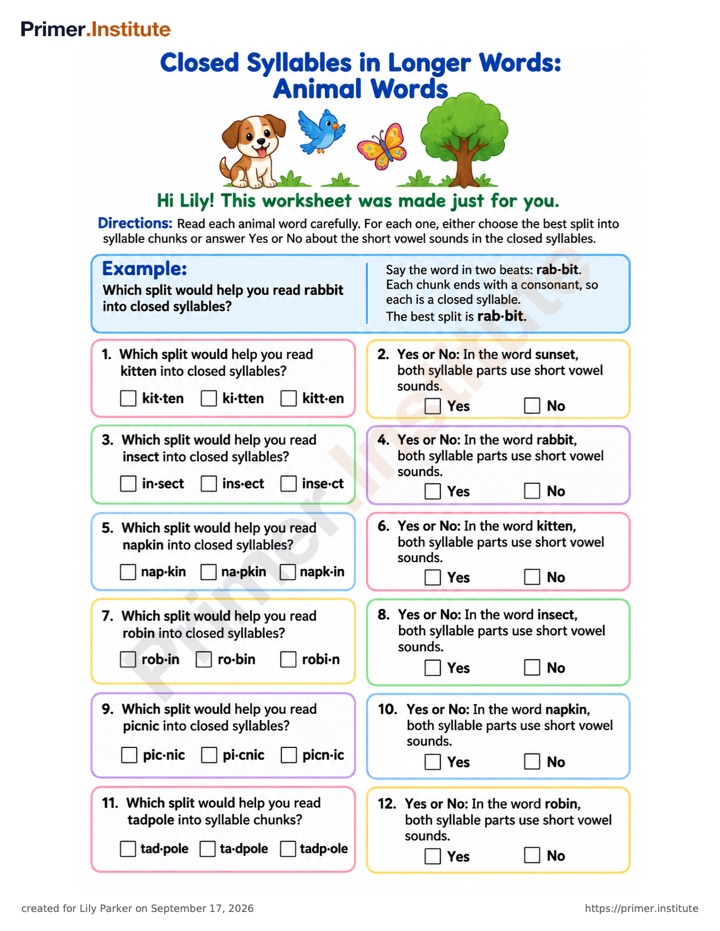
Twelve two-syllable words, most of them animals, each in its own color-coded box. Lily chooses the split that breaks a word into closed syllables, then checks whether both halves use a short vowel sound. Kitten, rabbit, insect, robin, and tadpole all make an appearance.
Skills on this worksheet
- Split a two-syllable word into closed syllables (rab-bit, kit-ten, nap-kin)
- Hear that a closed syllable ends in a consonant and keeps its vowel short
- Tell a closed syllable from an open one in a word like tadpole
- Read longer words by working one chunk at a time
Question types: Six multiple-choice splits and six yes-or-no questions about short vowel sounds.
Three of the questions
- Which split would help you read kitten into closed syllables?
- Yes or No: In the word sunset, both syllable parts use short vowel sounds.
- Which split would help you read tadpole into syllable chunks?
The answer key gives the answer to every question and, for the worked example at the top, the reasoning behind it.
How it was personalized
Lily loves animals, so the word list leans that way: kitten, rabbit, insect, robin, tadpole. A puppy, a bird, and a butterfly sit at the top of the page. The phonics pattern is standard first and second grade work; the words were picked for her.
A real lesson, a real student
Every Primer lesson has an Unplugged step, and any lesson can turn into a printable worksheet with one tap. This one came out of Lily's lesson on the same topic, so the questions check exactly what the lesson taught, in the words the lesson used. Names, interests, and the illustration come from Lily's profile.
Fill it out on paper, or on an iPad with Apple Pencil, where it is graded letter by letter. How worksheets work in Primer.
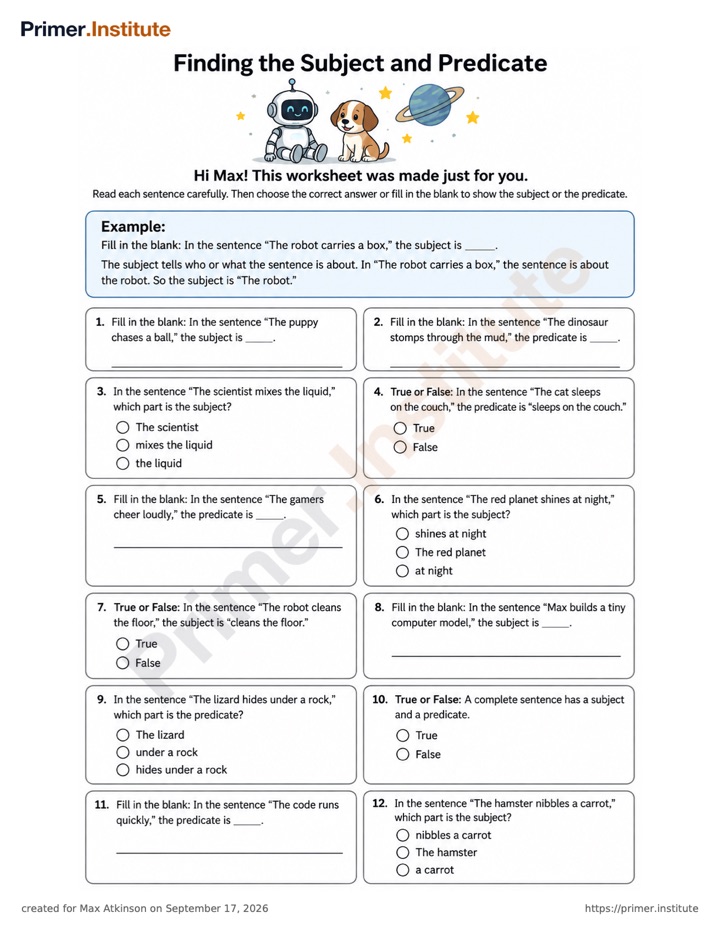
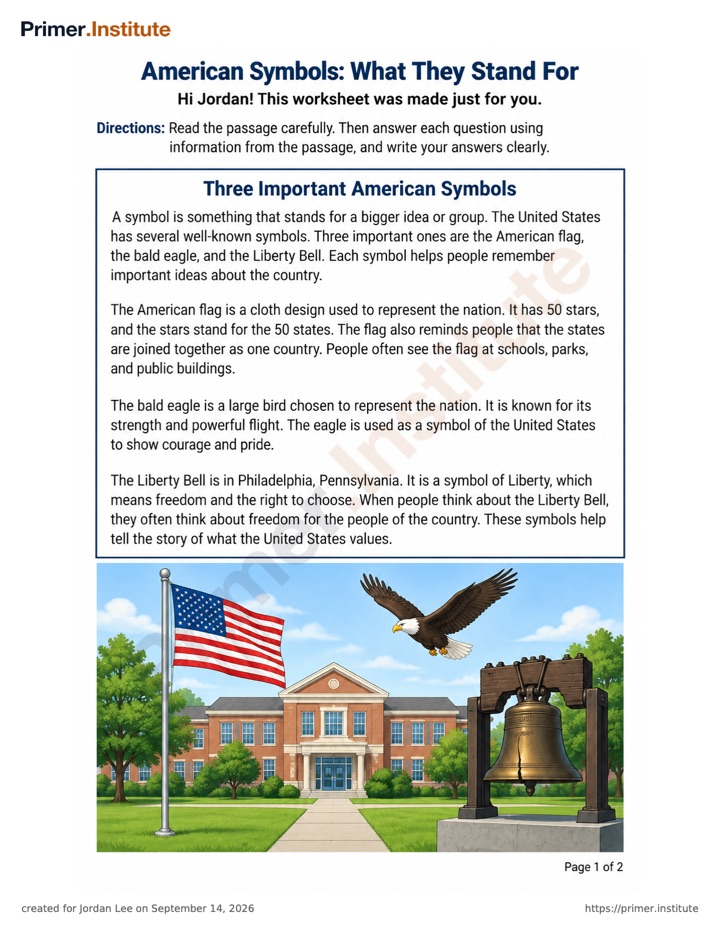
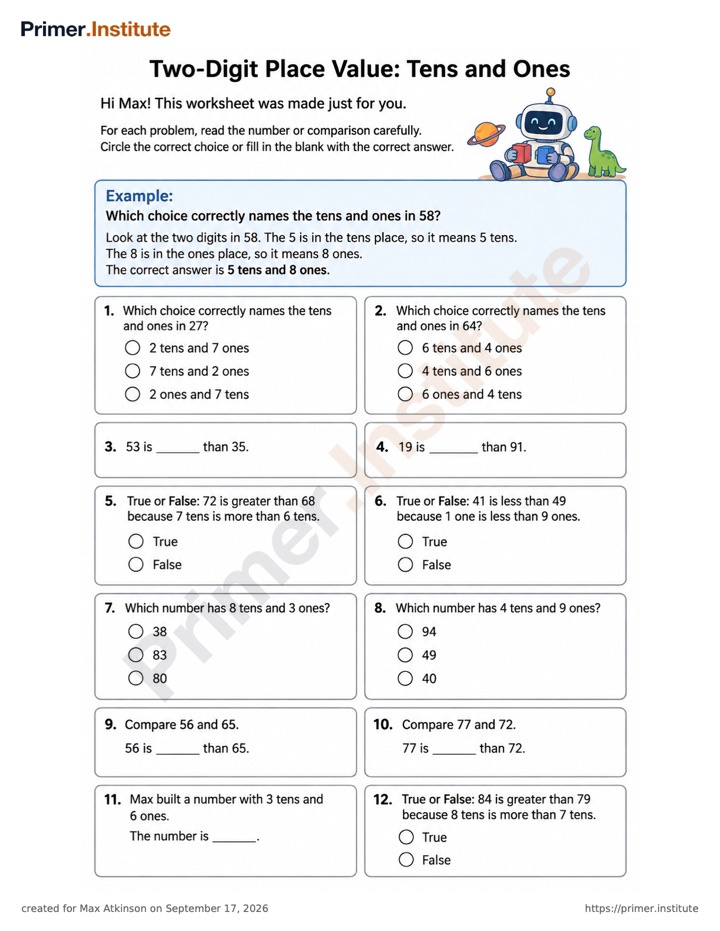
Get one with your student's name on it.
Every Primer lesson ends with a worksheet like this one, written for your student and their interests. Try a single free lesson with no account, or start a free trial.