| |||||||||||||

| |||||||||||||
|
Custom topics You Decide What They StudySchool decided this for you. Fourth grade means these units in this order, whether or not your kid has asked a single question about any of them. You do not have that constraint anymore. That is the part of homeschooling that took me longest to actually believe: if your kid wants to learn something, they can just… learn it. This week. Not in high school, if the elective happens to be offered. Theo, who is eight, wanted to know how circuits work. Maya wants to be a horse veterinarian. Neither of those is a fourth-grade unit anywhere. Here is what it took to put each of them in a real course.
One sentence, in your own words, on the Learning Topics card. No standards to look up, no scope-and-sequence to buy. Theo circuits
Maya horse vet
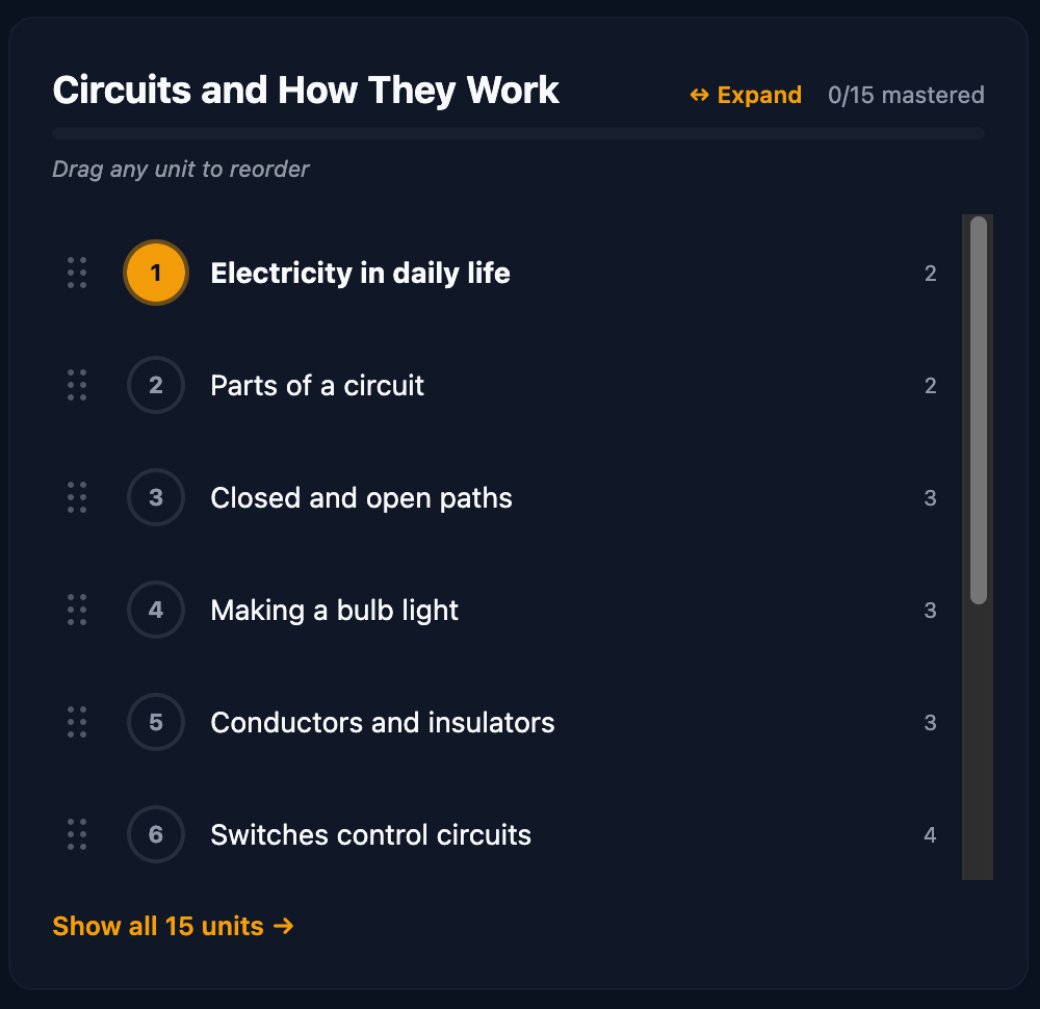
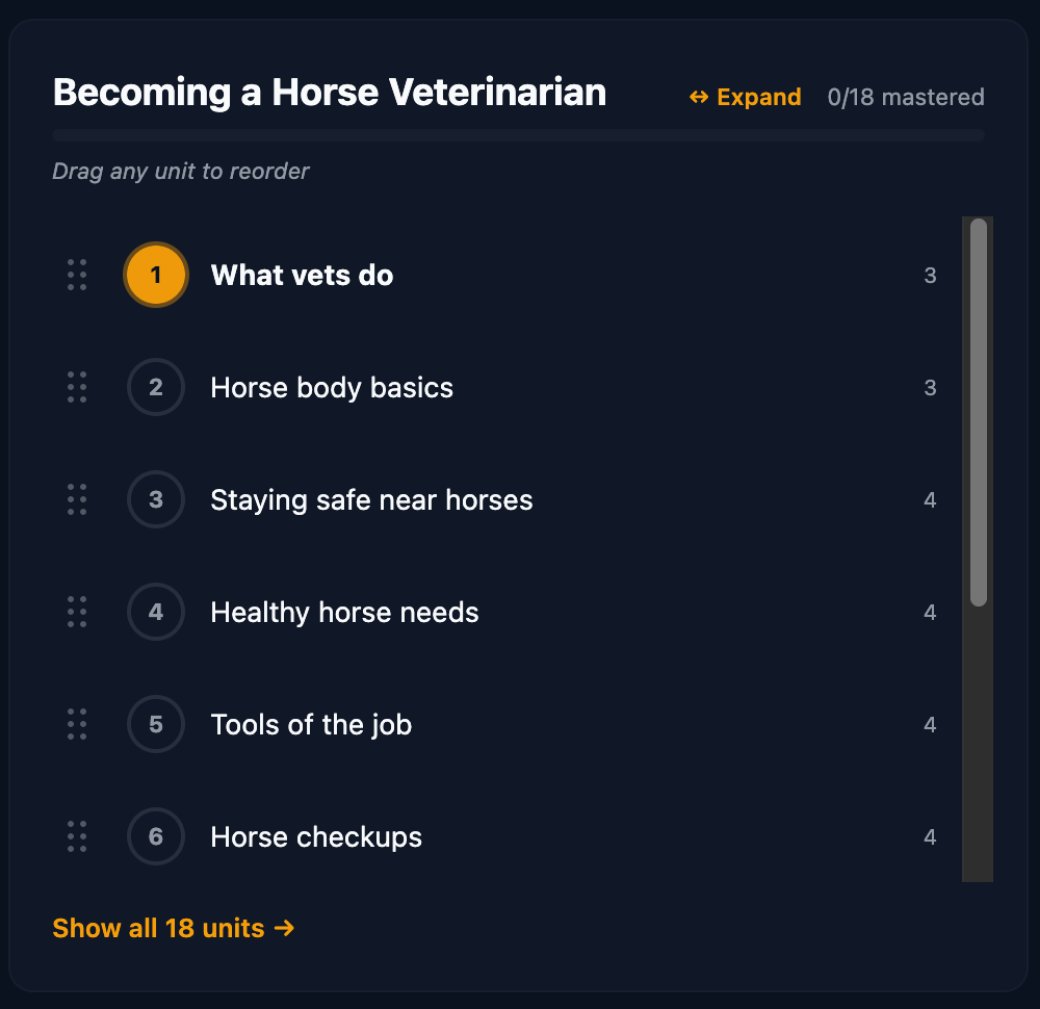
Primer turns that sentence into a real ladder of skill units, sequenced so each one rests on the last. Theo got 15 units. Maya got 18. You can drag them into a different order, skip one, or mark it mastered, so the path stays yours to edit. Theo 15 units
Maya 18 units
Same product, same day, two completely different ladders. Both start where an eight-year-old actually starts: what electricity does in your kitchen, what a vet does all day.
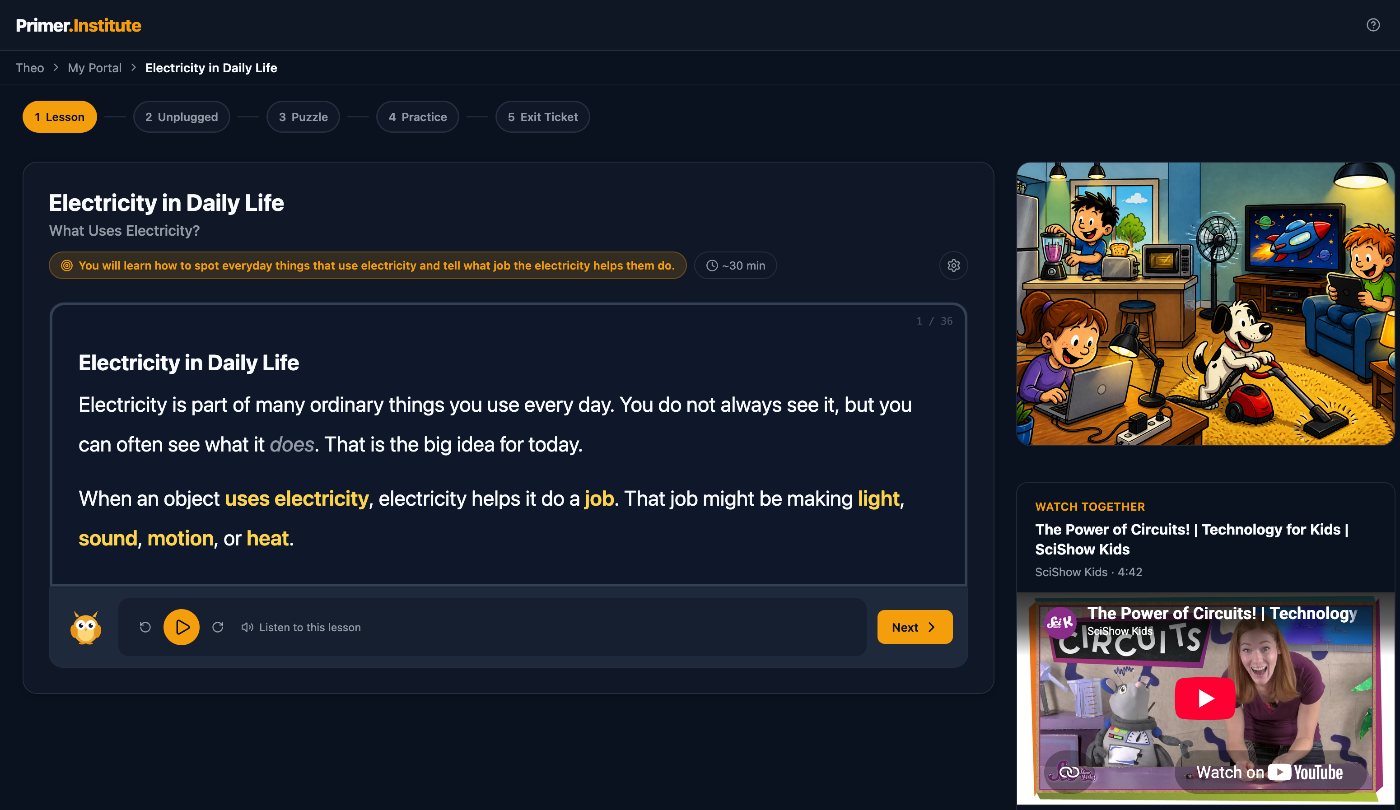
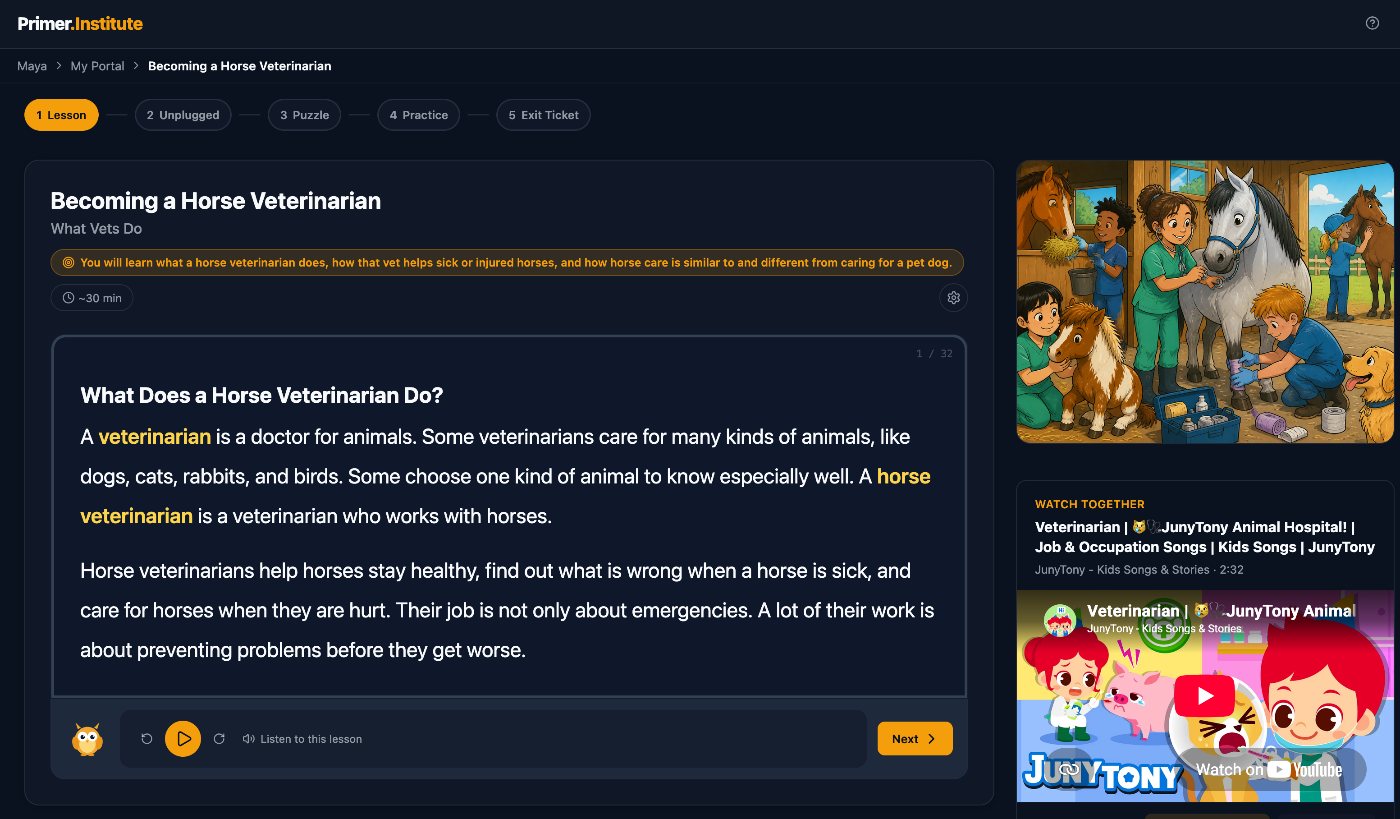
Then Primer builds unit one as a full lesson, the same five steps as any other subject: Lesson, Unplugged, Puzzle, Practice, Exit Ticket. Read-aloud audio, an illustration, key vocabulary in amber, and a hand-picked video to watch together. | |||||||||||||
| Theo Electricity in Daily Life | |||||||||||||
 | |||||||||||||
| Maya What Vets Do | |||||||||||||
 | |||||||||||||
|
The whole opening screen for each: step nav, objective, illustration, read-aloud audio, and the video to watch together. | |||||||||||||
|
Think past the school subjects A custom topic does not have to fit a subject name. If your kid wants to be an electrician, that is a path in electricity and a path in running a business: estimates, invoices, what a job costs against what you charge. A kid who wants to make games gets logic and geometry with a reason attached. Beekeeping, welding, songwriting, aviation weather, dog training, marine biology. Reading, writing, and math keep running underneath all of it. What changes is that the thing your kid is actually curious about stops being the reward for finishing school and starts counting as school. | |||||||||||||
| |||||||||||||
|
Add a topic tonight Start a trial, type one sentence, and see what Primer builds. Pioneer families get 20% off six months with code PIONEER26.
$40 / student / month, try risk-free. Cancel any time. | |||||||||||||
|
Homeschool · Reimagined Primer Institute, a product of Roman Court Technologies | |||||||||||||
| · — · |